


On this page
You've got a birthday, Father's Day, retirement present, or thank-you gift to sort out. The recipient plays golf, so you search for golf presents UK and immediately run into drivers, gloves, clothing, gadgets, and balls that all require knowledge you probably don't have. What loft do they use? What size do they wear? Do they even want more equipment?
The smarter question is simpler. Will this golfer value new kit, or would they prefer an experience they wouldn't book for themselves? Once you answer that, the options become much easier to judge. This guide matches the gift to the recipient's ability, confidence, habits, availability, and tolerance for booking hassle.
Why Choosing Golf Presents Feels Harder Than It Should
The usual gift panic starts with a familiar scene. Your partner mentions that a round was cancelled because of rain, your parent talks about trying a new course, or a friend jokes about needing to fix their swing. Then the calendar reminder appears, and suddenly you're expected to produce a thoughtful golf present without knowing the difference between a wedge and a wood.
The internet makes the problem worse by presenting golf as a shopping category rather than a person. A serious player may already own carefully selected clubs, balls, shoes, and clothing. Buying another item can mean duplicating something they chose for a reason. A casual player, meanwhile, may not want equipment at all. They may just want a relaxed round, a lesson without embarrassment, or the chance to choose a venue near home.
The real decision
A physical golf product works when you know the recipient's preferences. If they've pointed out a particular club, complained about their current golf bag, or regularly wear the same size and style of polo, you have useful evidence. Without that information, equipment becomes a gamble disguised as a present.
An experience gift removes more of that risk. The recipient can choose a course, date, lesson format, or level of support. That matters especially when you're buying for someone whose skill level is unclear, or for someone who plays in different places throughout the year.
Practical rule: If you can't name the equipment they want, don't guess. Give them control over the golf itself.
That doesn't mean every golfer wants a generic voucher. A confident club member may appreciate a specific premium round or an unusual professional experience more than an open-value gift. A beginner may feel anxious about a high-profile course and prefer a friendly lesson or flexible local booking.
The best golf present isn't the one with the most impressive description. It's the one the recipient can use comfortably, at a suitable venue, on a date that fits their life.
Who You Are Buying For in the UK
“A golfer” describes several very different recipients. The R&A's 2023 UK golf satellite account estimated that 4.3% of UK adults played golf during the previous four weeks, while 9.9% played at least once during the previous year. Those figures cover a broad participation base, so the right present depends on how often the person plays, how confident they feel, and whether golf is already part of their routine. The UK participation figures and country breakdown are summarised here.
England has the largest absolute audience, with approximately 1,919,316 adults playing during the previous four weeks and 4,327,200 during the previous year. Scotland recorded 272,953 and 645,988 respectively, Wales recorded 104,274 and 247,651, and Northern Ireland recorded 59,987 and 134,972. Scotland also had the highest four-week participation rate at 6.0%, compared with 4.2% in England and 4.0% in both Wales and Northern Ireland.
Those regional differences affect the usefulness of a golf present. A recipient in Scotland may have different course access and travel habits from someone in England. A golfer in Wales or Northern Ireland may prefer a gift that leaves the venue open. Location matters, but playing frequency and confidence matter more. Someone who plays once a year needs an easy reason to return, while a weekly golfer may want coaching, variety, or a more demanding experience.
UK Golf Participation Snapshot by Frequency
| Player Type | Typical UK Share | What They Want from a Gift |
|---|---|---|
| Occasional or annual player | Part of the 9.9% who played at least once during the previous year, but not necessarily during the previous four weeks | A low-pressure round, flexible voucher, or experience that makes playing easy |
| Recent or occasional regular | Part of the 4.3% who played during the previous four weeks | Choice of venue and date, particularly without a fixed club routine |
| Frequent club player | A smaller, more committed part of the overall participation base, defined by habit rather than a single UK-wide share | Coaching, a better course experience, or a change from familiar golf |
| Beginner or returning golfer | No single national share is supplied for this group | Confidence, straightforward booking, and an experience where ability is not the main focus |
Match the gift to the recipient's confidence. A frequent golfer may already own more equipment than needed, so another club or accessory can miss the mark. An annual player may resist a named course if reaching it requires planning or travel. A beginner can feel uncomfortable with a prestigious venue, especially if the gift creates pressure to perform. A friendly lesson, flexible booking, or relaxed round gives that person control without making ability the centre of the day.
The occasional player may care more about playing with friends than improving a score. Ask yourself whether the recipient wants progress, social time, or just a reason to get back onto a course. That answer is more useful than guessing from their interest in golf alone.
What the participation trend changes
Sporting Insights data reported that Great Britain golf rounds increased by 23% year to date in the first half of 2025 compared with the same period in 2024, with second-quarter rounds up 25%. Every Great Britain region recorded double-digit growth, and three of the four regions exceeded 20% growth, as reported in the 2025 rounds update.
That increase makes practical planning more important. A recipient who plays often may need a choice of dates and courses, while a less confident golfer benefits from a simple option close to home. Check whether the gift allows regional choice, suits peak or quieter playing times, and gives the recipient enough control to book without pressure.
The Main Gift Formats Side by Side
The safest way to shop is to choose the format first, then the product. You're deciding how much control the recipient should have, how personal the present should feel, and how much booking effort you're prepared to create.
A quick ranking for real buyers
| Format | Personal Feel | Sizing Risk | Flexibility of Use | Confidence Recipient Will Use It |
|---|---|---|---|---|
| Flexible golf voucher | Personal if you add a thoughtful message | None | Very high | High |
| Named-course round | High when you know their preferred area | None | Medium | High if location is right |
| PGA professional lesson | High and purposeful | None | Medium | High for a willing beginner or improver |
| Online swing analysis | Moderate, with a practical improvement focus | None | High on location, lower on recipient motivation | Medium to high |
| Play with a professional | Very high and memorable | None | Lower | High for a confident enthusiast, lower for a nervous beginner |
A flexible golf voucher is the all-rounder. It avoids equipment sizing, doesn't force you to choose the recipient's course, and can suit a casual player who wants one round as easily as a regular golfer looking for something new. A Golf Gift Voucher can be purchased for any amount from £50 to £1,000, delivered by email, and put towards lessons, rounds, or another golf experience on Swyng.
A single round at a named course feels more deliberate, but only if you know where the recipient enjoys playing or where they've always wanted to go. If you're guessing the location, the personal touch can become a restriction. Check the golf round voucher options carefully for player numbers, course choice, and booking conditions.
A PGA professional lesson suits someone who actively talks about improving. It's a good present for a beginner who wants guidance or an improver who has hit a plateau. Don't buy it for someone who treats golf purely as a social day unless you know they'll enjoy instruction.
An online swing analysis is useful for a golfer who likes practising independently and is comfortable filming their swing. It removes travel and location problems, but it does require the recipient to record the footage and engage with the feedback. It's a smart option for a technically minded improver, not a substitute for a relaxed day out.
A play-with-a-professional experience has the strongest wow factor, but also the most pressure. It works best for an enthusiastic golfer who already books rounds and enjoys talking about the game. It can double as a corporate reward or client experience, provided the recipient is comfortable playing with someone they don't know.
Matching the Gift to Skill Level and Confidence
The most expensive golf experience isn't automatically the best present. Matching the gift to the recipient's confidence beats chasing the highest price or grandest venue. A beginner may see a prestigious round as a test. A regular golfer may see a basic introductory lesson as something they've already outgrown.

The curious beginner
This recipient has played once at a social venue, joined a holiday round, or hit balls with friends. They may like golf but still feel unsure about etiquette, equipment, and whether they're good enough to play on a full course.
Give them choice without pressure. A flexible course voucher lets them select a welcoming venue and decide whether they want nine or 18 holes where that option exists. A group lesson can work even better when the social setting matters more than detailed technical correction. The recipient gets an enjoyable introduction rather than a performance review.
Avoid buying a full equipment set unless they've clearly asked for one. Beginners often change their preferences quickly as they discover whether they enjoy the social side, the practice, or the challenge of improving.
The improver
The improver plays regularly, attends the range, and may describe their ability using a handicap somewhere around 18 to 28. They've moved beyond curiosity and want useful feedback, but they may not yet have a trusted coach or a settled practice routine.
A PGA professional lesson with video analysis is the strongest fit. It gives them something specific to work on rather than another generic accessory. A remote review can suit someone who practises alone and wants feedback they can revisit, while an in-person lesson is better for a golfer who benefits from live correction.
The key is to avoid making the gift sound like criticism. Present it as a chance to explore their swing, not as evidence that their current game needs fixing.
The experienced club member
This golfer already knows their local course, owns their clubs, and books rounds without help. They may judge a present against a lesson with their regular coach, so a generic voucher can feel less thoughtful unless it opens up a completely different experience.
Choose a premium tee-time upgrade, unfamiliar course, or play-with-a-professional experience. The point is novelty and access, not basic instruction. If they're particular about dates, location, or playing partners, a flexible voucher may still be more considerate than a fixed booking.
Look for confidence signals before buying. Self-deprecating jokes about a swing can mean someone wants encouragement, or they can mean they don't want public coaching. Owning a full set of clubs and booking rounds independently suggests commitment, but it doesn't prove they want a competitive experience.
For a beginner-focused option, review the beginner golf coaching package and judge whether the recipient would enjoy structured help rather than assuming every new player wants it.
What Digital Delivery Gets Right and Wrong
Digital delivery solves one clear problem: the present can reach the buyer or recipient without waiting for a parcel. That makes it useful for a forgotten birthday, an overseas family member, or an employer sending rewards to people in different locations.
UK gifting behaviour supports the demand for speed, but it does not make digital delivery the better choice for every golfer. In 2025, approximately 35% of Father's Day gifts were bought at the last minute, almost a quarter were purchased during the week before the occasion, and more than 40% of transactions took place online, according to UK gifting data on Father's Day purchasing. The same reporting showed digital gift-card purchasing falling from 34.2% to 31.3% year on year in June, while physical gift-card purchasing rose from 29.4% to 36.5%.
Speed helps the buyer. A golfer who lacks confidence may also appreciate a physical card and a clear explanation, rather than receiving an impersonal email that leaves every next step to them. Digital delivery is a fulfilment choice, not a promise that the recipient can play the following day.
Digital Delivery Promise vs Redemption Reality
| Format | Email Delivery | Typical Lead Time to Play | Weather Risk | Booking Friction |
|---|---|---|---|---|
| Flexible voucher | Usually immediate for digital providers | Depends on recipient and venue availability | Moderate | Low to medium |
| Named-course round | Usually immediate if sold digitally | Often depends on tee-time availability | High | Medium |
| PGA lesson | Usually immediate if sold digitally | Depends on coach diary | Moderate | Medium |
| Online swing analysis | Usually immediate | Depends on filming and review process | Low | Low to medium |
| Play with a professional | Usually immediate | Often requires coordinating several diaries | High | High |
The table shows what arrives on the day: an email, a code, a value, and instructions. It does not create a tee time, choose a suitable course, or remove the need to plan. The recipient may still need to check weekend availability, guest-player rules, dress codes, travel distance, and weather.
Courses can restrict visitor bookings at certain times, while seasonal operating arrangements can affect winter availability. Those details matter more for an inexperienced golfer who may not know what to ask.
What the buyer should explain
Tell the recipient what happens next. They need the voucher code, booking instructions, and enough time to choose an experience that suits their confidence and playing ability. A beginner may need help selecting a lesson or venue. A confident golfer may prefer control over the date and course.
Corporate buyers should keep a record of delivery and state whether recipients choose independently or use a shared booking process. Digital vouchers can be forwarded, stored on a phone, or printed for a physical presentation. None of those options removes the need to reserve a date.
From Voucher Email to Tee Time
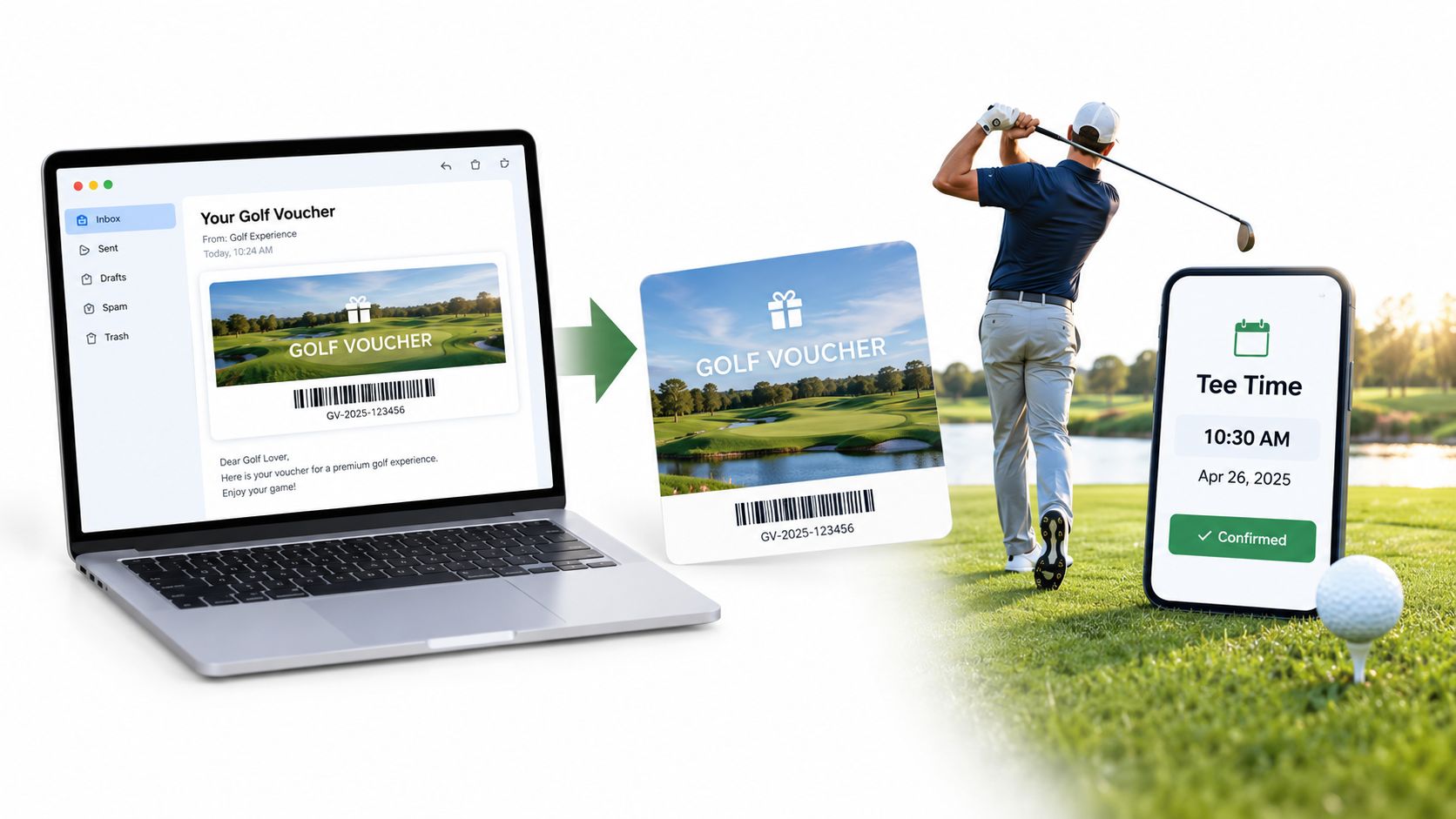
A golf voucher becomes useful through a sequence of small actions. Explain those actions when you give it, especially if the recipient isn't used to booking golf online.
Start with the voucher details
The recipient opens the email and finds the voucher code, value, redemption instructions, and validity information. Golf vouchers from the publisher are described as valid for 12 months from purchase, so the date matters. Put a reminder in the recipient's calendar rather than assuming they'll remember after the excitement of the occasion.
Some buyers also print the voucher or place a small note inside a card. That gives a digital present a physical moment without creating postal fulfilment for the actual booking document.
Choose the experience and venue
The recipient then selects a course, lesson, or other available experience through the relevant booking process. Depending on the provider, they may choose from listed availability online, contact the course or coach directly, or coordinate through a central booking portal. The guide to using a golf lessons voucher should be read alongside the individual voucher instructions because booking steps can differ by experience.
Check what the voucher covers before confirming. A round may include a green fee but not travel, food, equipment hire, or additional players. A lesson may apply to a defined session length, while a flexible-value voucher may be used towards an experience that costs more than the voucher.
Deal with the first preferred date
If the ideal Saturday isn't available, don't treat that as a failed gift. Ask about a midweek slot, another listed course, a different coach, or a date outside the busiest period. For a group, confirm whether every player can attend before booking, rather than assuming a four-person experience will fit four diaries.
If the recipient can't find a suitable date, they should contact customer support before the validity expires. Keep the voucher email and booking correspondence together. That makes it easier to resolve a closed course, a changed diary, or a booking question without losing the original details.
Flexible Value Versus Fixed Experience
Flexible value changes the buying decision because it transfers the most important choice to the golfer. A voucher from £50 to £1,000 can support a modest lesson, contribute towards a round, or form part of a larger experience. The right amount depends on what you know about the recipient, not on the appearance of the voucher.
Use flexibility when uncertainty is high
Choose open value for a recipient whose course, schedule, playing partners, or ability you can't confidently identify. It also suits employers and teams because different people can choose different venues and experiences instead of being forced into one shared format.
For a milestone birthday, flexibility can still feel thoughtful if the message explains the intention. “Choose a course you've always wanted to play” is more personal than handing over a code with no context.
Use a fixed experience when the preference is clear
A fixed lesson with a named professional, a specific round, or a play-with-professional package works when you know exactly what the recipient wants. It removes the effort of choosing and creates a stronger reveal. The trade-off is obvious: the more specific the gift, the more carefully you must check location, availability, guest rules, and the recipient's confidence.
| Price Point | Flexible Open-Value Voucher | Fixed Experience, Lesson, Round, or Play-with-Professional | Best Fit |
|---|---|---|---|
| £50 to £150 | Keeps choice open and limits the risk of choosing the wrong format | Can work when the venue or lesson is already known | Uncertain schedules, beginners, team rewards |
| £150 to £400 | Helps fund a broader choice without dictating the experience | Creates a clearer treat if you know their preferences | Improvers, birthdays, couples, regular players |
| £400 to £1,000 | Gives the recipient substantial control over a major experience | Makes the gift feel like a planned occasion | Confident golfers, milestone events, premium rewards |
Those price bands are a buying framework, not a rule. If the recipient has a strong preference, fixed wins at almost any value. If you're guessing, flexibility protects the relationship and gives the golfer a better chance of using the present.
A Clear Buying Decision and What to Check Before You Pay
The recommendation map is simple.
- For a beginner: choose a flexible voucher or welcoming lesson, especially if confidence is fragile.
- For an improver: choose a PGA lesson, video-supported coaching, or a useful remote review.
- For a regular club golfer: choose a new course, premium round, or professional playing experience.
- For an uncertain recipient: choose open value and let them decide.
- For an employer or team: choose flexible digital rewards so recipients aren't forced into the same location or format.
- For a last-minute occasion: choose email delivery, but explain that booking and weather still control the actual playing date.

Before paying, check the details that turn a good idea into a usable present:
- Validity: Confirm the 12-month window and note the expiry date.
- Face value: Check whether the displayed price is the voucher value or includes a separate service or delivery charge.
- Location: Look for courses and coaches within a realistic travel distance.
- Booking lead time: Ask how far ahead peak-season rounds and lessons need to be reserved.
- Guest policy: Confirm whether a non-member can play and whether the venue has visitor restrictions.
- Dress code: Check clothing requirements before choosing a traditional or premium course.
- Date changes: Read the rules for moving a booking after confirmation.
- Weather and closure support: Find out what happens if the course closes or the coach becomes unavailable.
- Transfer and extension rules: Don't assume the recipient can transfer the voucher or extend it.
- Email records: Make sure the delivery address is correct and the recipient can retrieve the code later.
The common mistakes are predictable. Don't buy equipment based on a guess, select an experience that's far from the recipient's home club, or assume instant delivery means instant play. Choose the gift that fits how they golf.
Golf Gift Vouchers offers email-delivered vouchers from £50 to £1,000, redeemable towards golf lessons, rounds, and other experiences through its UK network. If you want a flexible golf present without guessing the recipient's course or ability, visit Golf Gift Vouchers and choose the format that gives them the right amount of control.