


On this page
You've agreed to join friends for a round, but you've never held a club. You're standing near the first tee wondering whether everyone will notice your grip, your swing, or the ball that travels only a few metres. That nervousness is normal, and it's exactly why golf lessons for beginners should start with confidence and a usable plan, not a hunt for a perfect swing.
The UK already has a substantial audience of occasional and developing golfers. The R&A estimates that 5.356 million UK adults play golf at least once a year, while 2.357 million play at least once every four weeks. It also reports that 9.9% of UK adults play at least once annually, so beginner coaching can act as a gateway into a mainstream sport, not a niche pastime. (The R&A's 2023 Satellite Account for Golf in the UK)
My strongest advice is simple: don't treat your first lesson as a one-off event. Treat it as the opening appointment in a short sequence that moves from basic contact, to practice, to supervised course access. A tidy swing is useful, but staying engaged long enough to play is the win.
What Your First Golf Lesson Actually Feels Like
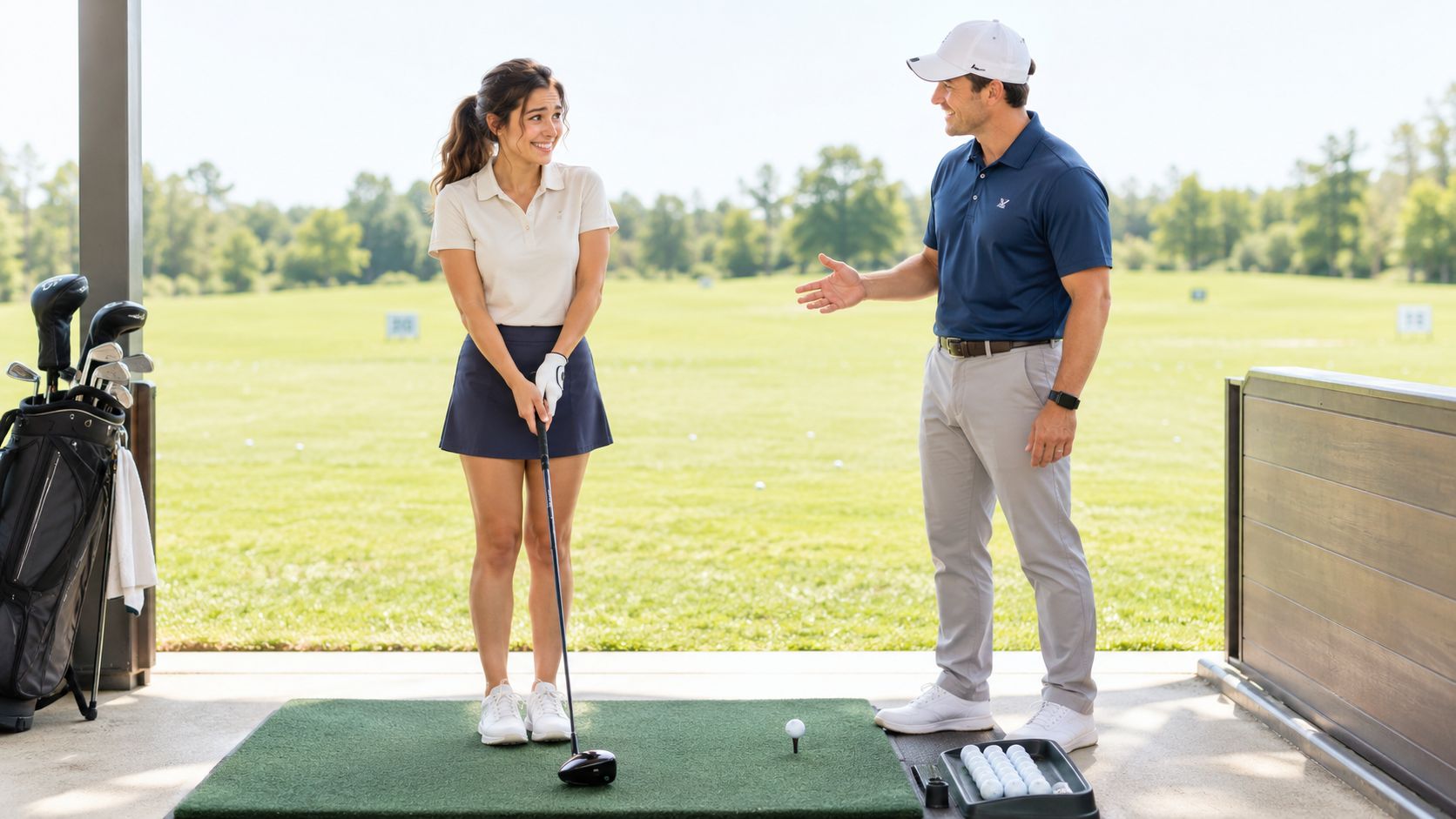
You arrive at the range early, carrying clubs you borrowed or bought before you knew what you needed. The bay feels exposed. Other golfers are striking balls cleanly, and every swish and thud seems louder than it should.
A good coach changes that atmosphere quickly. They'll ask what brought you to golf, whether you've played any sport before, and what you want to do first. Perhaps you want to keep up with colleagues, enjoy a relaxed round with a partner, or stop feeling lost around a golf bag. That conversation gives the lesson a destination.
What the coach is really looking for
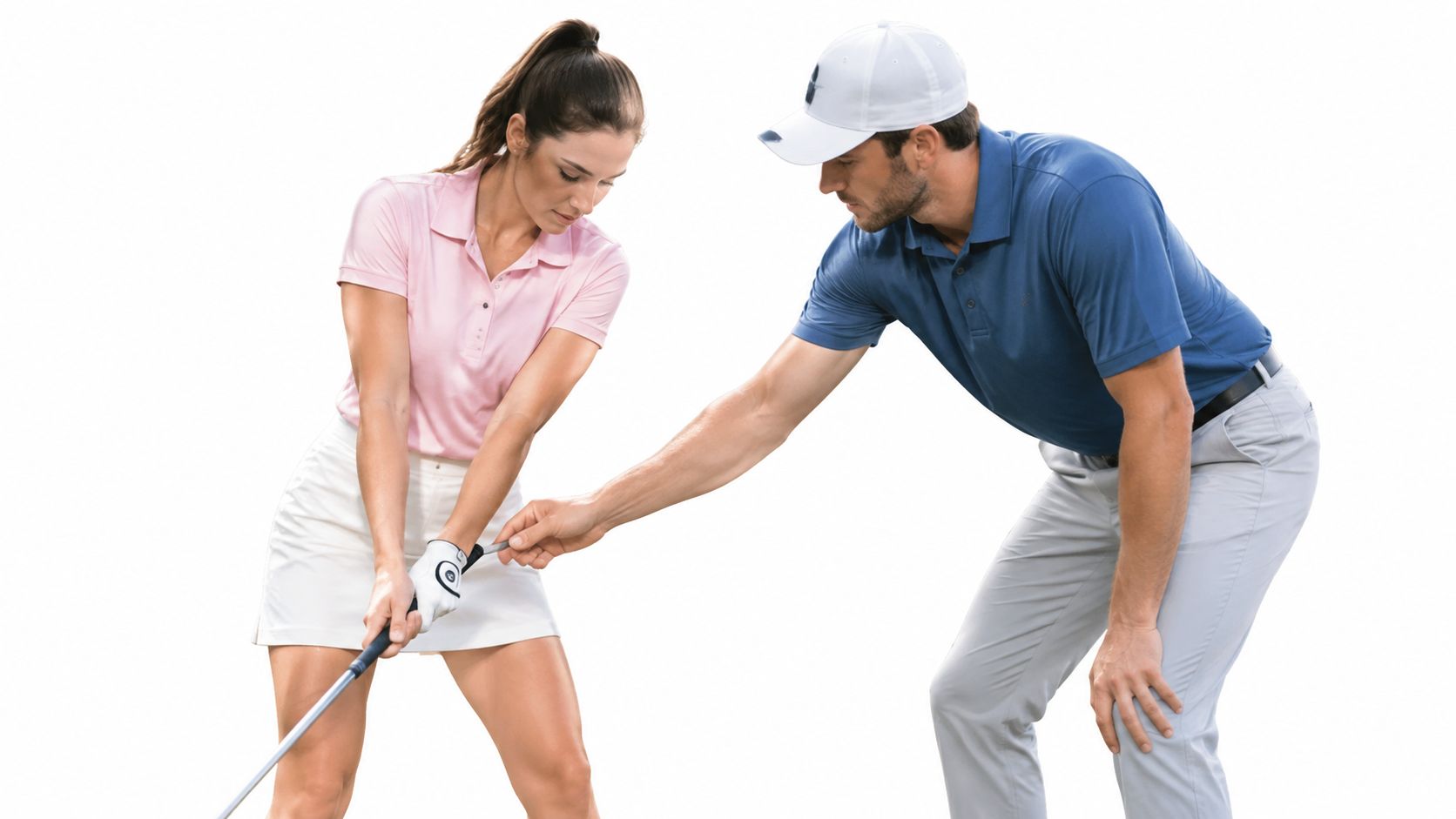
Your instructor isn't waiting for a polished swing. They're watching how you stand, how you hold the club, how you respond to a miss, and whether you're trying to hit the ball too hard. Those observations help them choose the first useful adjustment.
You might begin with a short iron and a few small swings. You may top the ball, miss it, or send it sideways. None of those outcomes means you're bad at golf. They give the coach information, and the coach's job is to turn that information into one manageable task.
Coach's rule: Your first lesson should leave you with a clear next step, not a head full of swing thoughts.
The lesson may include putting or chipping, basic terminology, and an explanation of what to bring next time. You don't need to learn the entire game in one sitting. You need to leave knowing how to grip the club, set up without fear, make a controlled movement, and practise one drill safely.
That's why I'd rather see a beginner finish with a modest, repeatable contact than chase one dramatic drive. Distance can come later. Comfort, balance, and a reason to return matter more at the start.
Inside a Typical First Lesson for Beginners
A first lesson should feel organised without feeling rigid. Your coach will adjust the sequence to your movement and goals, but the underlying process is usually straightforward.
Start with assessment, not assumptions
The opening conversation establishes your experience, physical limitations, and expectations. Tell the coach if your back, wrists, shoulders, or knees need special consideration. Mention whether you own clubs, whether you've only tried a few shots, and whether your immediate goal is the range or the course.
Then you'll usually make a few natural swings. Don't try to impress anyone. A coach can learn more from your ordinary movement than from a forced attempt to copy a professional.
Build the setup
The first technical work normally covers the basics:
- Grip: Hold the club securely without squeezing it. Excess tension makes it harder to move the club smoothly.
- Aim: Learn how the clubface points towards the target, rather than relying on your feet alone.
- Stance: Place your feet so you can stay balanced while the club moves.
- Posture: Tilt from the hips and let your arms hang naturally, rather than crouching over the ball.
These details matter because they give the swing a reliable starting position. They also make feedback easier. If the setup changes on every shot, you won't know whether a better result came from a useful movement or a lucky arrangement.
Make smaller swings first
Your coach will probably start with short swings using a manageable iron. The aim is controlled contact, not maximum speed. You'll learn to keep the movement compact, notice where the club meets the ball, and finish in balance.
Putting or chipping may follow. That's valuable because short shots teach distance control without demanding a full athletic motion. A beginner who can roll a putt with a consistent pace already has a practical skill for the course.
If you're buying an experience for yourself or someone else, a PGA Golf Lesson can be arranged as a one-to-one lesson from 30 minutes to multi-lesson packs, delivered by email and valid for 12 months.
Finish with a plan
By the end, you should know what to practise, how often to practise it, and what result to look for. You shouldn't expect to understand swing mechanics, course strategy, every rule, and every club on day one. If you leave with one dependable setup cue and one simple drill, the lesson has done its job.
Lesson Formats Compared and What Each Costs
There isn't one correct lesson format for every beginner. Group programmes are the cheapest way to test whether you enjoy coaching, while one-to-one tuition is the quickest way to get feedback on your movement. A multi-lesson package makes the most sense when you already know you want a structured start.
UK prices vary by region, venue, coach, and session length. Independent UK coaching guidance places programme sessions as low as £10 to £25, while individual PGA-led lessons commonly range from £25 to £45 for 30 minutes or £30 to £90 for an hour. Regional averages in the same guidance range from about £34 in the North East to £60 in the South East.
| Format | Typical UK Price | Session Length | Best For |
|---|---|---|---|
| Group introductory programme | £10 to £25 | Programme-dependent | Testing golf socially and keeping the initial cost low |
| Individual lesson | £25 to £45 | 30 minutes | A focused first assessment or a beginner with limited time |
| Individual lesson | £30 to £90 | 60 minutes | More detailed coaching and questions |
| Multi-lesson one-to-one pack | Varies by coach and venue | Multiple sessions | Beginners who want continuity and accountability |
Which option should you choose?
Choose a 30-minute diagnostic lesson if you're uncertain, short on time, or want a coach to identify your first priority. It's enough to assess your grip, posture, movement, and contact without overwhelming you.
Choose a 60-minute lesson if you're comfortable asking questions and want time for both full-swing basics and short-game work. It can also suit someone who has already tried golf and needs a more detailed reset.
Choose a package if you're serious about reaching the course. Beginners commonly need repeated feedback because a movement that feels correct in the bay can disappear during solo practice. UK PGA coaching-platform data found that 70% of bookings were for one-to-one lessons, while 25% were for a series of one-to-one sessions, supporting the case for individual coaching with a planned follow-up. (PGA Play booking data)
A flexible Golf Gift Voucher can be set to any amount from £50 to £1,000, delivered by email, and put towards lessons, rounds, or another golf experience on Swyng. If you're buying for a beginner, flexibility is more useful than guessing which venue they'll prefer.
For a more structured start, review the available golf lesson package and check that the format gives the player a realistic chance to return for coaching.
Milestones That Mark Real Beginner Progress
A beginner's success isn't a beautiful swing on the final ball of a lesson. It's whether they come back, practise without confusion, and feel ready to attempt the next golfing environment.
The UK coaching data supports that sequence. One England Golf-backed programme reported more than 22,000 coaching participants, followed by 7,300 people taking later golfing opportunities. Another report recorded over 18,000 coaching-session participants and 6,230 adults and juniors taking follow-on opportunities. (England Golf beginner coaching report)
That conversion makes the practical point clear. Coaching works better as a bridge into continued play when the learner has an accessible next step, such as another lesson, a range session, or a supported visit to a short course.
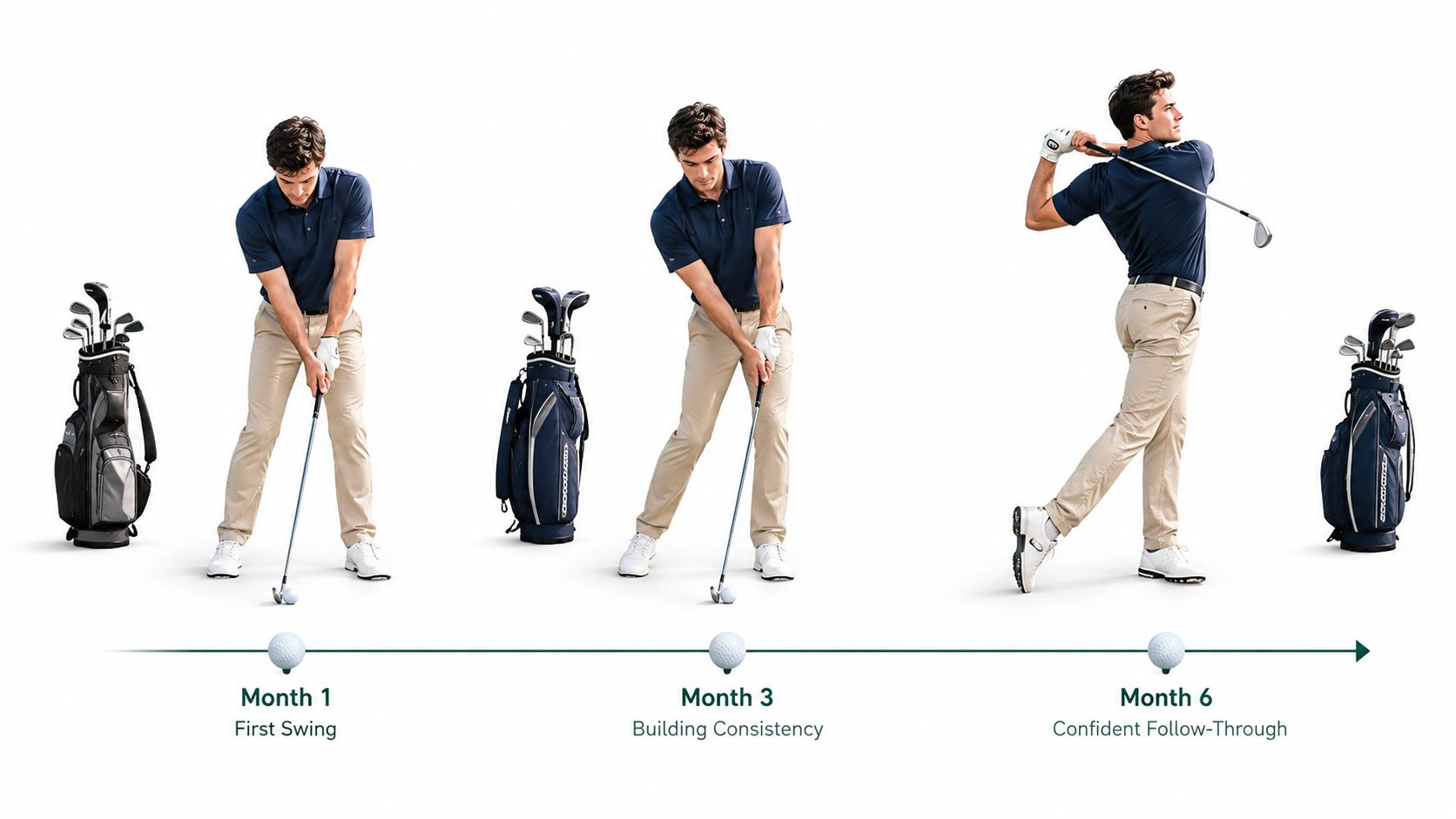
A useful six-month progression
Early weeks should feel less mysterious. You're learning how to hold the club, stand over the ball, and make a controlled movement. A good sign is that you can describe your drill in plain language and repeat it without constant correction.
The next stage is contact and control. You're not chasing perfect shots. You're learning to strike shorter irons more predictably, start the ball in a sensible direction, and vary the length of a chip or putt.
After that, course confidence becomes the priority. You should be able to prepare for a quiet hole, choose a sensible club, follow basic safety and etiquette, and keep moving after an imperfect shot. A supervised on-course session is particularly useful here because range practice can't teach you where to stand, when to wait, or how to think between shots.
By six months, retention is the measure. If you've maintained coaching, practised regularly, and played in manageable settings, you're building a golf habit. That matters more than whether your swing looks elegant.
The R&A's earlier participation reporting recorded 5.2 million adult golfers on a full-length course, with 36% either returning or new to the game. It also reported that 16% started or tried golf for the first time because of the pandemic, and that a third of first-time adult golfers were under 25. (R&A participation reporting via Statista) The lesson for coaches and beginners is the same: welcoming new players is only half the job. The pathway must help them stay.
Practice Habits That Make Lessons Stick
The best beginner practice is short, deliberate, and slightly boring in the right way. You're trying to repeat a useful movement, not collect heroic range sessions that leave you tired and confused.
At home
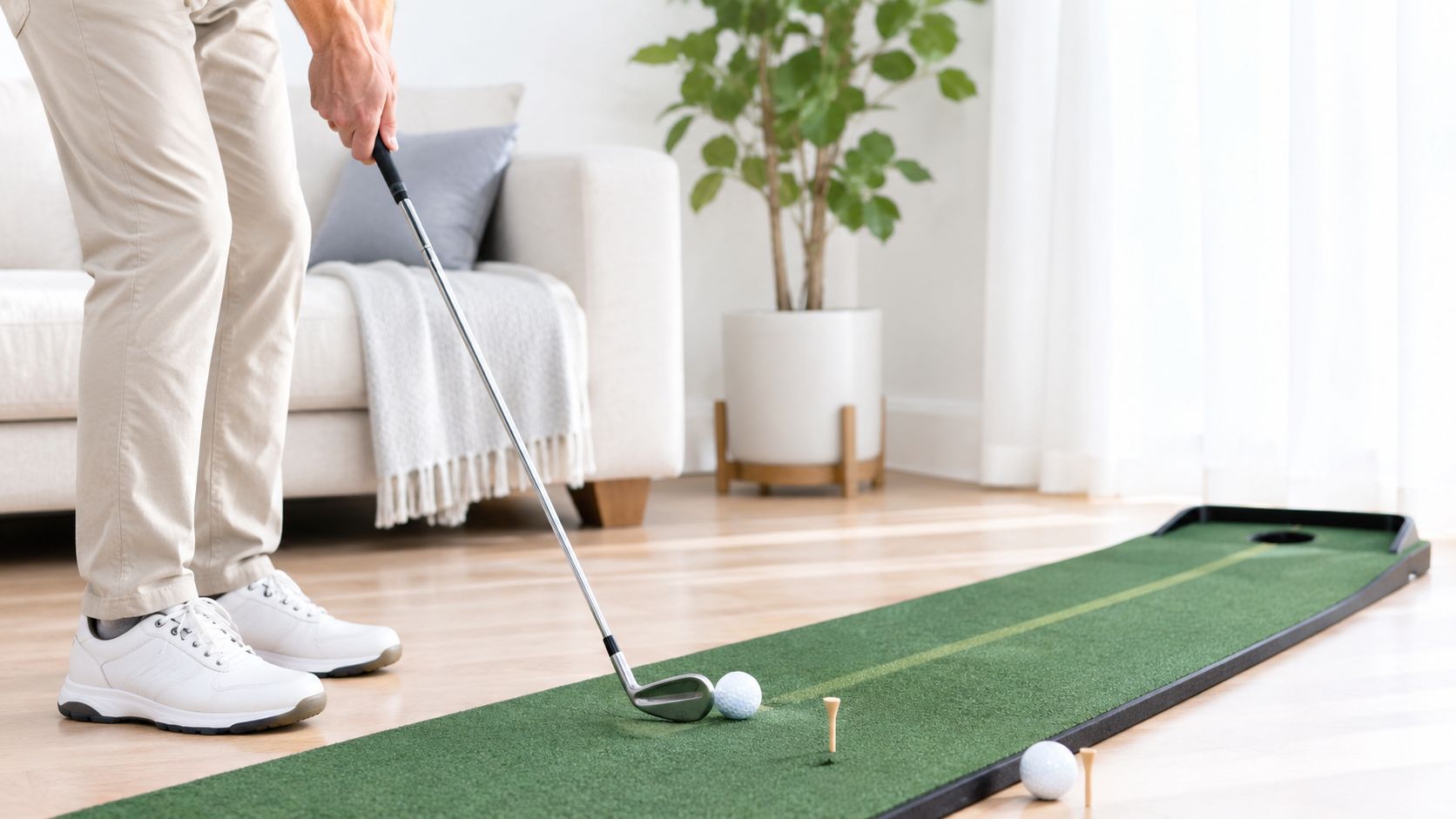
Use a safe indoor space for setup rehearsal without hitting a ball. Hold the club, place your feet, tilt from the hips, and make slow half-swings. Check that you can finish balanced. A mirror or phone video can help you notice whether your posture changes, but don't turn every practice session into an analysis project.
Spend a few minutes rehearsing the grip and setup your coach gave you. The point is familiarity. When you return to the range, you should spend less attention wondering where your hands go.
On the putting green
Start with distance control. Roll putts towards a target without worrying about holing every attempt. Notice how far the ball travels when your stroke stays smooth, then adjust the length of the movement rather than hitting harder.
Chipping deserves equal attention. Use a simple landing target and focus on clean contact. A short chip that lands predictably is more useful than a powerful shot that occasionally flies well beyond the green.
At the range
Begin with the drill from your lesson, then hit a few ordinary shots and compare the feel. Use a short iron before moving to longer clubs. If the contact becomes worse as you swing harder, reduce the length and speed until you can regain balance.
Practical rule: Leave the range with one clear observation, not ten new swing thoughts.
If you want to connect practice with playing skills, an on-course playing lesson lets a coach guide you through decisions, etiquette, and shot selection in the environment you want to enter. That's often the missing link between hitting balls and playing golf.
Choosing a Beginner-Friendly Voucher That Grows With You
Price alone is a poor way to choose a beginner golf voucher. The cheapest appointment may offer no clear follow-up, no practical route to the course, and no flexibility if the recipient lives far from the venue.
A useful voucher should remove friction at each stage. The learner should be able to begin with a PGA-led assessment, return for coaching, and move towards a supervised round or suitable partner course without starting the search again from scratch. A redeemable voucher also avoids the common mistake of buying equipment before the beginner knows what fits.
The checks that matter
| Feature | What to Look For | Why It Matters for Beginners |
|---|---|---|
| Coach credentials | PGA professional delivery | Beginners need clear, safe instruction from someone used to teaching new players |
| Network coverage | Venues and coaches in relevant UK regions | A convenient location makes follow-up more realistic |
| Lesson structure | A first lesson plus repeat options | Beginners need time to practise and receive corrections |
| Course access | A supervised or suitable route towards playing | Range confidence doesn't automatically become course confidence |
| Validity terms | A clearly stated redemption period | The learner can schedule around work, weather, and other commitments |
Avoid the cheap-but-isolated option
Before buying, ask what happens after the first session. If the answer is unclear, you're purchasing an appointment rather than a pathway. Also check whether the voucher recipient chooses the venue at redemption, whether coaching is one-to-one, and whether the terms explain how booking works.
A voucher with UK coverage is particularly useful for gifts because the buyer may not know which course is convenient. Golf lessons voucher guidance can help you think through lesson length, coach choice, and the difference between a single session and a package.
The publisher's Golf Gift Vouchers platform offers digital golf experiences delivered by email, with options redeemable through PGA professionals and partner courses across the UK. Its voucher terms include a 12-month validity period, so the recipient can choose a suitable time rather than rushing into an unsuitable booking.
Buying advice: Fund the next two steps, not just the first swing.
Your First 30 Days in Golf
A month is enough to find out whether golf belongs in your routine. Don't wait until your calendar, clubs, confidence, and weather are all perfect. Book the first appointment and let the coach assess what you need.
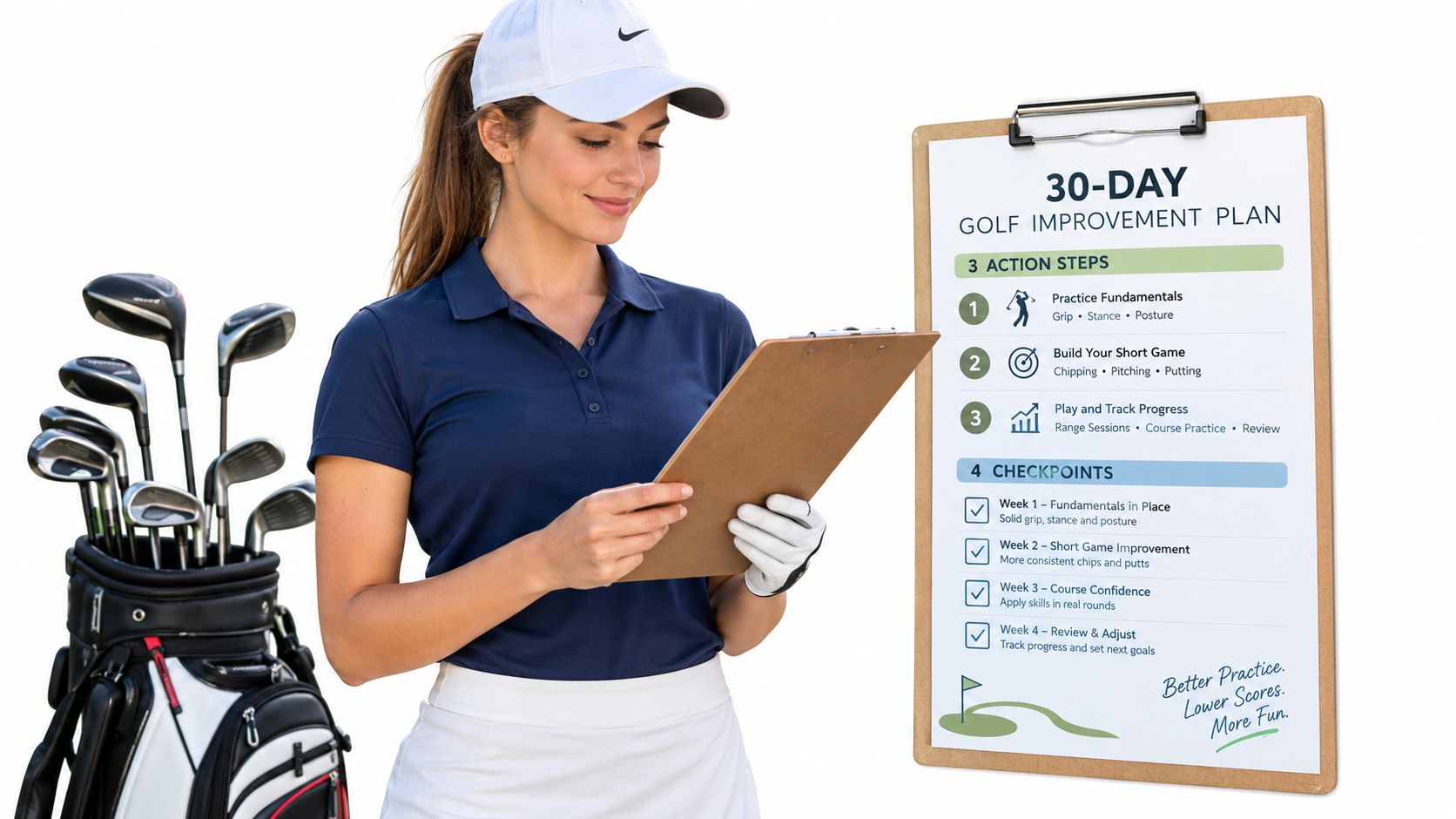
Three actions
- Within seven days, book a 30-minute diagnostic lesson. The coach needs to see your grip, posture, movement, and contact before setting your practice priorities.
- Schedule two 30-minute practice sessions each week. Make one a short-game session for chipping and putting, and make the other a range session that repeats the coach's drill.
- Choose a redeemable beginner package before day 30. Include at least one follow-up lesson and one supervised on-course session, so your learning has somewhere to go.
Four checkpoints
- Week one: Complete your physical and technical assessment.
- Week two: Look for your first more consistent iron contact.
- Week three: Practise short-game control around targets inside 30 yards.
- Week four: Play a first three-hole loop on a quiet par-three or academy course.
The data points towards beginners staying engaged when coaching connects to follow-on opportunities. Don't measure your first month by swing perfection. Measure it by whether you're practising, returning, and getting closer to playing.
Golf Gift Vouchers offers digital vouchers for PGA-led lessons, lesson packs, rounds, and other golf experiences across the UK, delivered by email and valid for 12 months. Start your beginner pathway with a first lesson that can lead somewhere, then visit Golf Gift Vouchers to choose a flexible experience for yourself or a new golfer.