


On this page
You're buying for a golfer, and you've already hit the problem: the clubs are too personal, the clothing size is a guess, and choosing a course without knowing their diary is asking for trouble. A golf lesson voucher avoids most of that guesswork, but only if you match the format to the person receiving it.
A nervous beginner needs something very different from a low-handicap golfer chasing a swing change. Someone living miles from a course may prefer remote coaching, while a social golfer might value time on the course with a professional more than a technical lesson. The smart purchase isn't a voucher. It's the right coaching or playing experience for that golfer.
Why Golf Lesson Vouchers Work as a Gift
Buying golf equipment for someone else is risky. Golfers care about grip size, shaft feel, loft, brand, fit and personal preference, and they often have strong opinions about courses too. A voucher hands those decisions back to the recipient, which is exactly where they belong.
The UK has a substantial audience for golf experiences. A UK golf satellite-account study estimated that 3.883 million adults played golf at least once during a year, while 1.553 million played at least once every four weeks. The same research estimated consumer spending on golf-related goods and services at approximately £4.3 billion. That means a voucher isn't a strange niche gift. It fits an established recreational habit.
A lesson voucher has an advantage over merchandise because it creates a useful decision rather than adding another object to the recipient's garage. The golfer can choose a coach, location, duration or format that fits their actual needs.
Match the gift to the golfer
Start with three questions:
- What can they already do? A complete beginner may need reassurance, basic safety guidance and help making contact with the ball. An experienced player may want analysis of ball flight, club delivery or course strategy.
- What do they want? Improvement, confidence, a social day out and a technical overhaul are different goals.
- Where do they live and play? A voucher that looks attractive on screen becomes frustrating if the venue is inconvenient or difficult to book.
A beginner may find a first lesson less intimidating than being sent straight into a full round. An occasional player might benefit from a single focused session before returning to the course. A committed golfer may get more from a longer lesson or a pack that provides continuity.
Practical rule: Don't buy the most impressive-looking voucher. Buy the one the recipient will actually redeem.
A flexible golf gift voucher can be the sensible fallback when you don't know the recipient's preferred venue or coaching goal. It lets them configure the experience later, rather than forcing you to guess now.
Golf coaching also works as a gift because it gives the recipient something to work towards. The PGA Play explanation of how a golf lesson works describes a coaching process built around objectives, assessment, feedback and practice. That's more useful than a vague promise of “improving your swing”. The buyer's job is to make sure the voucher gives the recipient enough freedom, time and support to follow that process.
Choosing the Right Voucher Format
The format matters more than the artwork on the voucher. A short face-to-face lesson, an online swing review and a round with a professional all suit different people, even when they're sold as golf experiences.
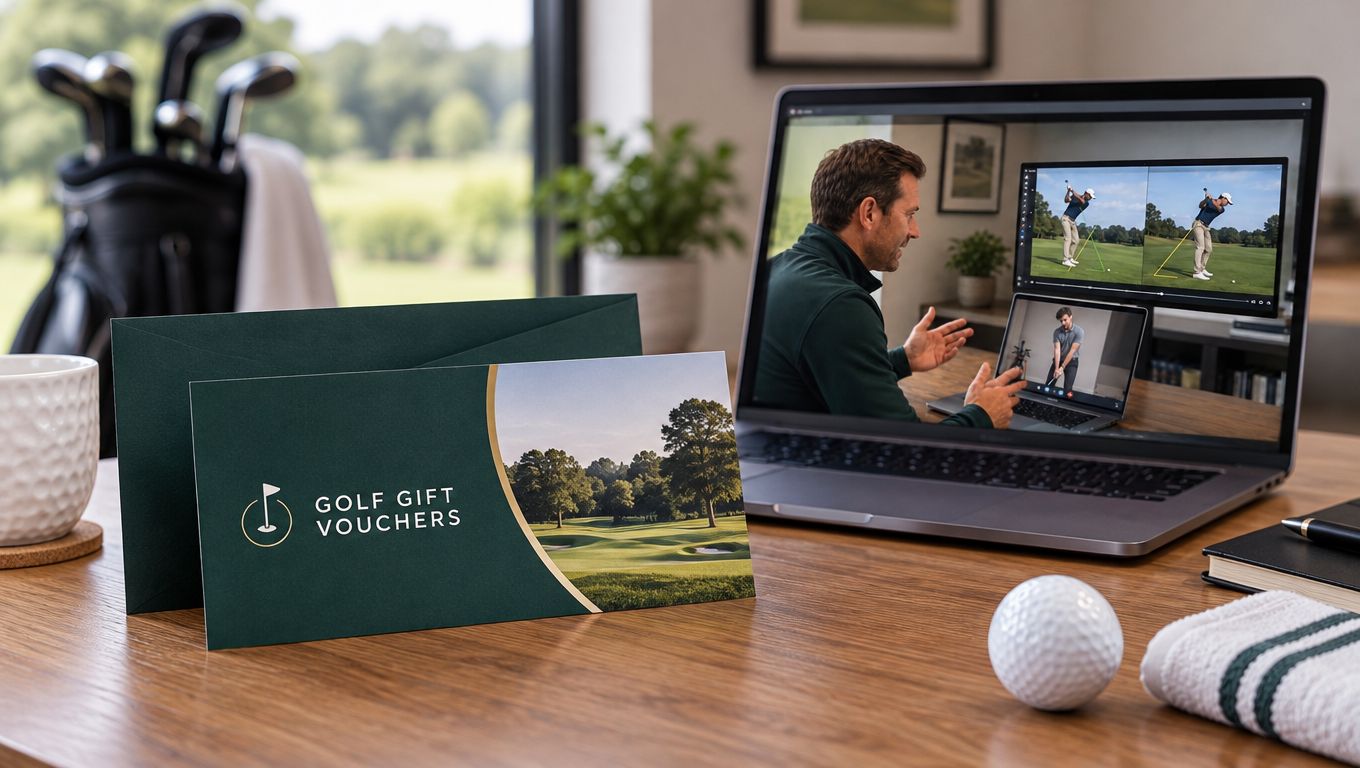
A complete beginner should usually receive an in-person lesson. They may not have a reliable swing to film, and they'll benefit from a coach who can adjust the explanation, check their set-up and make the first experience feel manageable. Face-to-face coaching also removes the awkwardness of trying to diagnose a movement from a poor phone angle.
An improver who already plays regularly should consider a 60-minute or 120-minute session. That gives the professional more room to understand the problem, observe several shots and create a practice plan. A 30-minute session can still work when the goal is narrow, such as checking one club or addressing one recurring fault.
For a golfer with limited time or poor access to a venue, Online Swing Analysis is a different proposition. The recipient films a swing on a phone, receives the review by email from a PGA professional and gets a practice plan. It's convenient, but it depends on the golfer being able to record useful footage and understand the feedback.
A round with a professional may be the better choice for someone who wants company, course strategy and a memorable day rather than a technical rebuild. A flexible value voucher is safest when you don't know whether the recipient wants coaching, a round or an online option.
| Format | Best For | Watch Out For |
|---|---|---|
| Flexible value voucher | Buyers unsure about the recipient's preferred experience | The recipient still has to make the final choice |
| 30-minute lesson | Beginners, focused questions and small corrections | Limited time for a full assessment |
| 60-minute lesson | Improvers who need diagnosis and a practical plan | Requires a suitable venue and appointment |
| 120-minute lesson | Golfers with several connected issues or a serious improvement goal | Too much information if the session lacks structure |
| Lesson pack | Committed golfers who want continuity | A poor fit if the recipient rarely practises |
| Play with a professional | Social golfers and memorable on-course experiences | Less suitable for someone seeking detailed swing work |
| Online swing analysis | Busy or remote golfers comfortable filming their swing | Weak footage can limit the usefulness of the review |
Don't treat “online” as automatically easier. Treat it as a good fit only when the golfer can record the swing clearly, follow written feedback and practise independently.
Lesson Lengths and Lesson Packs Explained
Duration is the biggest value decision, and buyers often get it wrong by assuming longer is always better. It isn't. A longer session only helps when the coach and golfer use the extra time for assessment, prioritisation and practice.
A 30-minute lesson is useful for a defined purpose. It can introduce a beginner to coaching, check a specific club or give an experienced golfer a second opinion on one issue. It becomes restrictive when the golfer arrives with several problems and expects a complete swing overhaul.
A 60-minute lesson gives the professional more space to establish the golfer's objective, watch ball flight and examine movement. A 120-minute session can be worthwhile for a deeper diagnosis, especially when the golfer needs time to test a change and understand how to practise it. The important point is structure. More minutes shouldn't mean more swing thoughts.
When a pack earns its place
A lesson pack works when the golfer is prepared to return, practise between sessions and build on previous feedback. The coaching workflow described in the PGA Play lesson guidance is strongest when the next session checks retention and transfer rather than starting from scratch.
A pack can support:
- A baseline session: Identify the golfer's objective, current pattern and most important change.
- A practice period: Give the golfer a limited task to repeat between appointments.
- A review session: Check whether the change survives outside the lesson environment.
- A refinement session: Adjust the plan only after the first change has been tested.
That sequence is more valuable than cramming every possible correction into one visit. It also helps a golfer understand whether the advice works on the course, not merely on the practice mat.
One long lesson or two shorter ones
Two shorter sessions often beat one very long session when the golfer needs time to practise and return with useful questions. A single longer appointment makes more sense when travel is difficult, the golfer wants an initial assessment and practice design in one visit, or the issue needs uninterrupted observation.
Be honest about commitment. Don't give a pack to someone who plays once a year and dislikes scheduled activities. For that person, a focused single lesson is kinder and more likely to be used. Give a pack to the golfer who already visits the range, talks about lowering their scores and will act on a clear assignment.
Buying, Gifting and Redeeming Step by Step
The smoothest purchase starts with the recipient, not the checkout page. Decide whether they need coaching, flexibility or an experience they can share, then choose the format and value that match.
Suppose you're buying for a golfer who plays regularly but lives away from their usual club. A fixed lesson at a venue you've chosen may look thoughtful, yet it could create a scheduling problem. A flexible option lets them select a practical location and arrange the appointment around work, weather and existing golf plans.
The buying journey
- Choose the format. Pick a lesson length, pack, online review, on-course experience or flexible value option.
- Enter the recipient details carefully. Check the email address. A digital voucher is only useful if it reaches the right inbox.
- Choose delivery timing. Email delivery suits last-minute gifting because there's no postal wait. For a planned present, check whether the recipient should receive it immediately or on the occasion.
- Pay through the available checkout options. Card payment is straightforward, and instalment payment may be available where offered at checkout.
- Keep the confirmation. Save the order email and voucher details until redemption is complete.
The recipient should read the email rather than treating it as a decorative gift message. They'll need the voucher details when selecting a venue or coach, and they should start checking availability before assuming a preferred date will be free.
The redemption process normally involves choosing the experience, selecting a suitable venue or professional and coordinating the booking. The platform or booking operator handles the practical arrangements, but the recipient still needs to provide accurate contact details and respond to scheduling messages.
Where buyers create friction
The common mistakes are predictable:
- Choosing a venue before checking location. A recipient may prefer convenience over prestige.
- Leaving booking until the last minute. Golf calendars, coach availability and weather can all restrict choice.
- Assuming the buyer manages the booking. Once gifted, the recipient usually needs to take control of dates and preferences.
- Ignoring follow-up emails. Booking confirmations and requests for availability can land separately from the original voucher.
If something goes wrong, the recipient should contact the booking or customer-support team using the details supplied with the voucher. Don't rely on the buyer to relay messages weeks later. The recipient is the person who knows the diary, location and preferred experience.
Reading the Terms Before You Buy
The small print decides whether a voucher feels flexible or becomes a race against the calendar. Read it before paying, especially if the recipient lives far from the likely venue, has accessibility requirements or may need to rearrange plans.
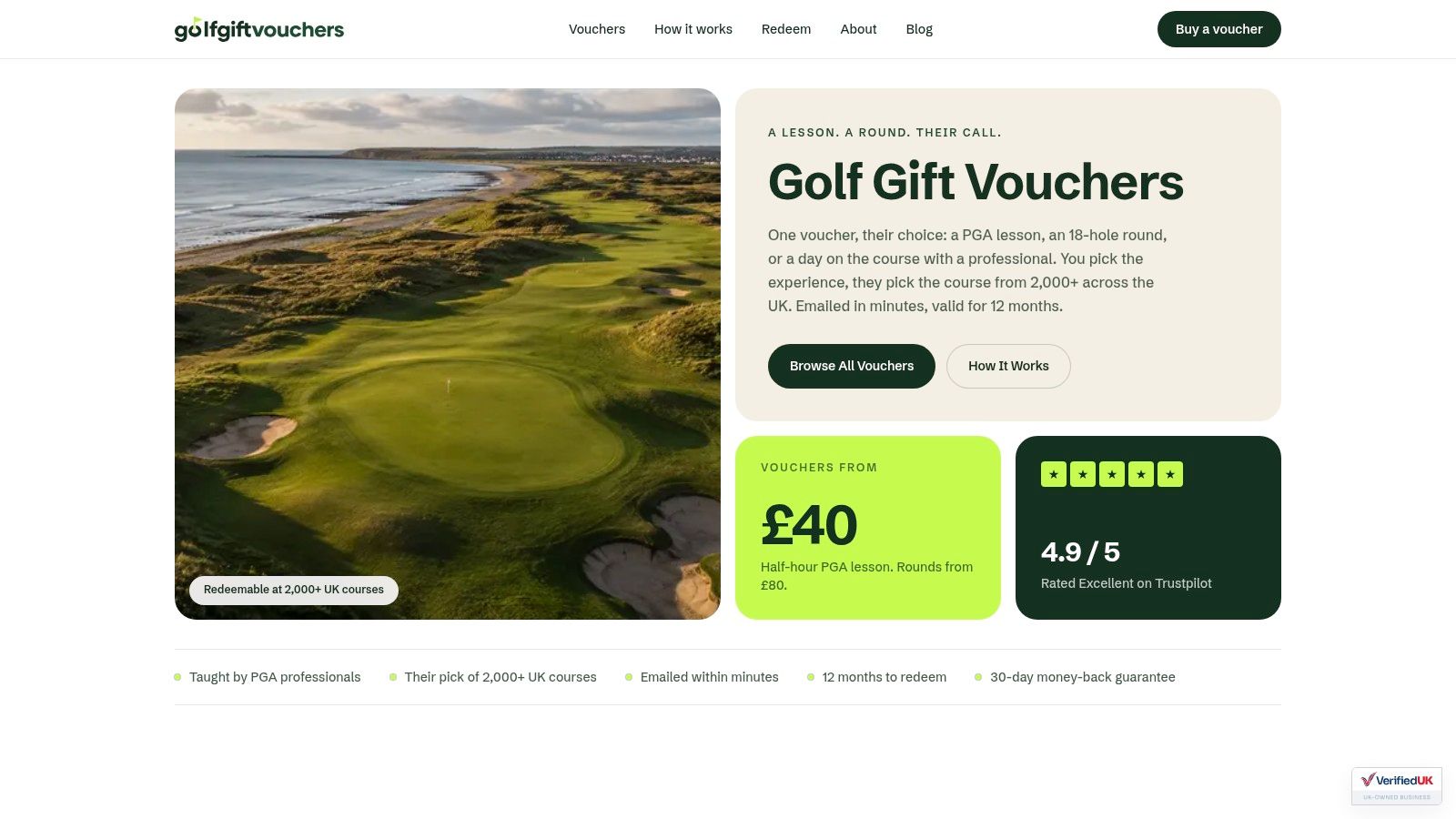
Golf Gift Vouchers states that its digital vouchers remain valid for 12 months from purchase. That sounds generous, but golf is seasonal, weather-dependent and tied to course availability. The date of purchase isn't necessarily the date the recipient opens the email, books the experience or attends the lesson. Those are separate moments, and buyers should understand which one controls expiry.
Dates that need checking
Look for clear wording on:
- Purchase date: When the transaction is completed.
- Delivery date: When the email arrives.
- Booking date: When the recipient arranges the lesson or experience.
- Experience date: When the recipient attends.
A voucher may need to be booked before expiry even if the appointment takes place later, or it may require the experience itself to happen within the validity period. Don't assume. Ask before buying if the terms aren't explicit.
UK voucher guidance says there's no universal statutory minimum validity period. Expiry is generally contractual, so the business must make the term clear, prominent and fair. The UK voucher guidance is useful background, but the specific voucher terms still control the transaction.
Questions worth asking
Check whether the voucher can be transferred if the intended recipient can't use it. Confirm whether partial redemption is allowed, whether unused balances remain available and whether an experience can be exchanged for another format. Weather, course closure, illness and coach cancellation should each have a stated process.
Also check junior use and accessibility. England's junior club membership rose from 46,028 to 61,483 in 2025, a 34% increase, according to reported England Golf membership figures. That doesn't make every voucher automatically suitable for a junior, so confirm age rules, supervision requirements and equipment arrangements.
An unredeemed voucher may qualify for a 30-day money-back guarantee, where the publisher's terms provide one. Read the conditions rather than treating the guarantee as an automatic refund after booking.
Getting the Most Out of the Lesson
A voucher only creates potential. The recipient has to turn it into practice, and that starts before the first ball is struck.
Wear clothes that allow movement and shoes suitable for the setting. Ask the venue whether clubs are available before assuming the recipient needs a full set. A beginner shouldn't feel pressured to arrive with expensive equipment, and an experienced golfer should bring the club or clubs connected to the problem they want to solve.
Tell the coach the truth about the goal. “I want a better swing” is too broad. “I lose confidence with mid-irons,” “my driver misses right under pressure” or “I want a reliable pre-shot routine” gives the professional something usable.
What a productive session looks like
A strong lesson usually follows a diagnostic-to-practice path:
- Set the objective. Explain the problem, playing context and previous coaching.
- Observe the pattern. The coach may assess ball flight, club delivery and movement, using video or launch-monitor information where available.
- Choose one or two changes. More corrections rarely create better learning.
- Test the change. Hit enough shots to separate a genuine improvement from one lucky strike.
- Leave with a constrained plan. Know what to practise, how to recognise a good repetition and when to stop.
The PGA Play coaching guidance reports that 78% of respondents rated coaching impact as good or excellent, while 66% were highly likely to continue coaching or recommend lessons. Those are self-reported engagement outcomes, not proof of a particular handicap reduction. The useful lesson for buyers is that coaching works best when the recipient engages with it rather than attending once.
Better question: “What should I practise, and what should I ignore for now?”
Write down the practice task immediately. Keep it narrow. A golfer who leaves with ten technical thoughts usually remembers none of them under pressure. A golfer who leaves with one movement feel, one ball-flight check and a short practice routine has a fair chance of carrying the change onto the course.
If the voucher covers more than one session, return with evidence. Note the miss pattern, the club used and whether the change held up beyond the first few minutes. That gives the coach something concrete to review and makes the next lesson a continuation rather than another reset.
Quick Answers and Final Reminders
Do beginners need their own clubs? Usually not for a first lesson, but ask the venue or coach what's available. A beginner needs suitable equipment, not a rushed shopping trip.
Does a lesson pack save money? It can provide better coaching continuity and may offer better value per hour, but only if the recipient will attend and practise. A single well-chosen lesson beats an unused pack.
What happens if the weather turns? Check the cancellation and rescheduling terms before booking. Outdoor lessons and rounds may depend on course conditions, coach availability and reasonable notice.
What if the email is lost? Keep the purchase confirmation and contact customer support with the order details. Don't wait until the validity period is nearly over.
Can a junior use the voucher? Possibly, but confirm age restrictions, supervision, equipment and accessibility arrangements before purchase.
Can it be shared between players? Don't assume. Transferability and partial redemption depend on the voucher terms, so ask before buying if the intention is to split the experience.
The two decisions that matter most are simple: match the format to the golfer, then read the terms before paying. Choose coaching for improvement, an on-course experience for shared memories and flexibility when you don't know what the recipient wants.
Golf Gift Vouchers offers digital vouchers for PGA lessons, lesson packs, on-course experiences and online swing analysis, with the recipient choosing the suitable experience and venue at redemption. Visit Golf Gift Vouchers to compare the available golf lesson voucher formats and choose a gift that fits the golfer rather than guessing at their equipment or diary.