


On this page
You've got a birthday, retirement gift or last-minute thank-you to buy, and the recipient already owns enough golf kit to fill a garage. A new club could have the wrong shaft, clothing could miss the size, and even a seemingly safe glove depends on handedness. The smarter question isn't “Which golf product should I buy?” It's “Which golf experience will this person use?”
For most golf gifts in the UK, the answer is a flexible experience rather than more equipment. The UK has a large, varied golfing audience, and a voucher can give a beginner, regular player or committed club golfer control over the venue, date and format. This guide judges each option by the golfer you're buying for, not by how impressive the product looks in a gift guide.
Why Most UK Golf Gift Guides Start With the Wrong Question
The common mistake is treating golf gifting as an equipment-buying decision. That works for a golfer who has sent you a precise product link, but it's a poor default for everyone else.
Golf equipment is personal. Clubs depend on swing characteristics and specification. Shoes depend on size and width. Gloves depend on hand and fit. Apparel depends on size, cut and taste. Even golf balls can be a poor guess if the recipient has already settled on a particular model. A technically expensive item can still be useless when it doesn't match the person using it.
Gift guides often favour equipment because it's easy to photograph, categorise and compare. That doesn't make it a safer present. A product can look authoritative on a page while creating several problems at home: the golfer may already own it, dislike the brand, need a different specification or feel awkward asking for an exchange.
Why experiences remove the biggest risks
An experience changes the decision from “What does this golfer use?” to “What does this golfer want to do?” That's a much easier question to answer, especially when the recipient can choose the course, date or coaching format after receiving the gift.
A flexible voucher can avoid four common failures:
- Wrong fit: There's no need to guess a shoe, glove or clothing size.
- Wrong preference: The recipient can choose the venue or experience that suits them.
- Wrong timing: They can book around work, weather and family commitments.
- Duplicate equipment: The gift creates an outing or learning opportunity instead of adding another item to the garage.
Practical rule: If you can't name the recipient's home course, current equipment preference and stated golfing goal, don't buy technical hardware as a surprise.
That doesn't mean physical gifts are always poor. Balls, towels, tees and rain gloves can work for a golfer you know well, particularly when you've seen the brand and style they already use. They're consumables or simple accessories, so the fit risk is lower.
For everyone else, a verified UK experience is the stronger choice. A round at a course the buyer knows the recipient would enjoy, a lesson for someone who wants to improve, or a flexible voucher for someone whose schedule and preferences are unclear all offer more useful certainty than another branded object. Golf gifting should begin with the recipient's habits, not the product category.
Who You're Actually Buying For
The UK golf audience is far from one uniform group. The R&A's Satellite Account for Golf in the UK estimates that 5.356 million UK adults play golf at least once a year, including 2.357 million who play at least once every four weeks. Its regional figures show annual participation among 4.2% of adults in England, 6.0% in Scotland, 4.0% in Wales and 9.9% across the UK overall, while Scotland records 14.2% for at least monthly play.
That scale matters to a buyer because the person receiving the present could be a committed club member, an occasional pay-and-play golfer, someone who only visits a driving range or a complete beginner who has never booked a tee time. Each needs a different kind of confidence from the gift.
The golfer types that change the decision
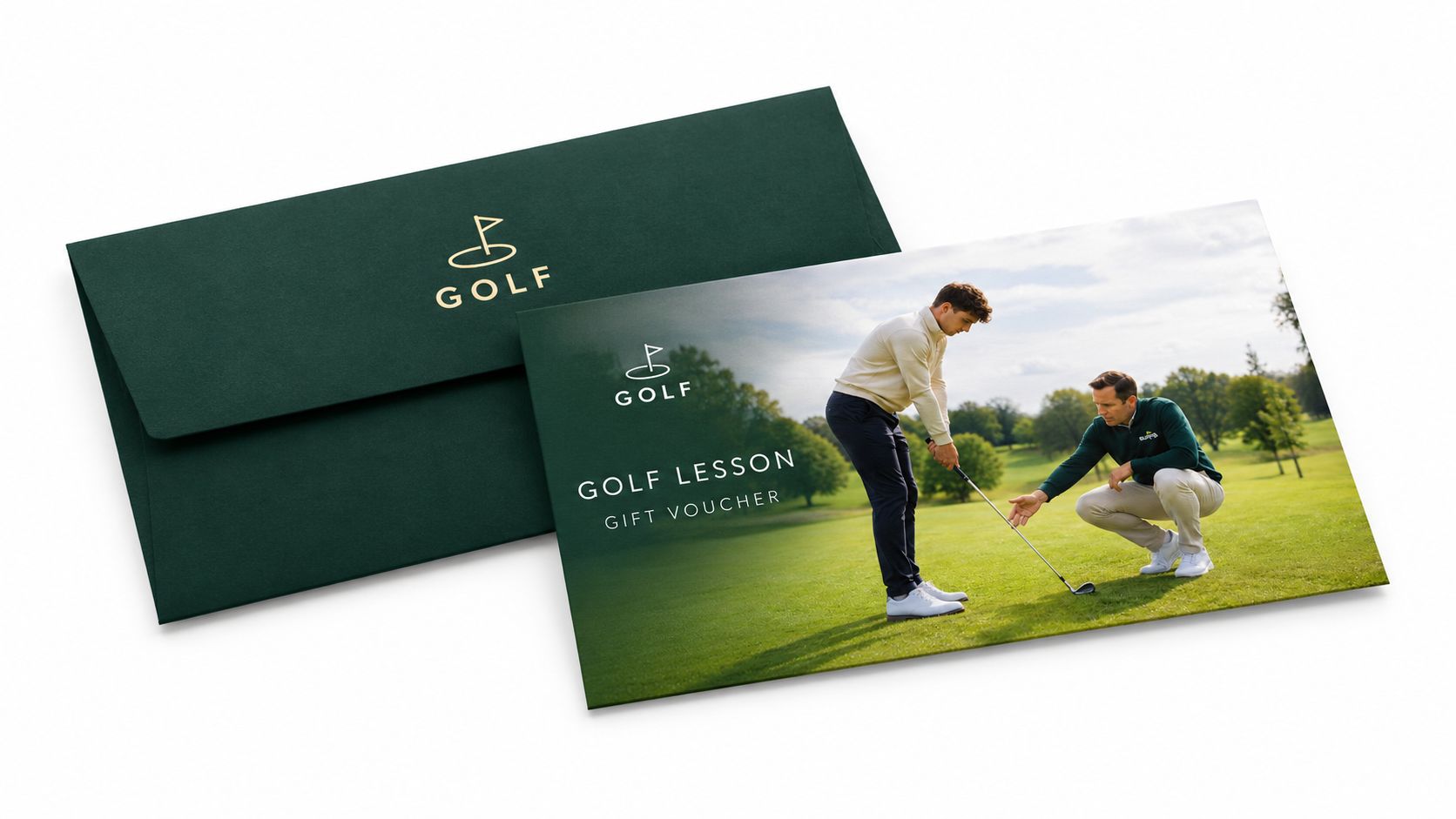
The beginner partner needs a low-pressure introduction. A one-to-one PGA Golf Lesson can suit someone who has said they want to learn, with options ranging from 30 minutes to multi-lesson packs, email delivery and 12-month validity. If they haven't expressed an interest in coaching, a flexible voucher is less intimidating than presenting a lesson as an instruction to improve.
The social weekend player usually values convenience and company. They may prefer a round for two or four people, close to home, rather than a technical lesson or a premium accessory. Recipient control matters because their available weekend may not match yours.
The club member already knows their preferred course and may own carefully selected equipment. Don't guess at clubs, bags or balls. A voucher towards a round, coaching or a new venue is safer unless they've supplied an exact request.
The range or simulator enthusiast may not play traditional 18-hole golf regularly. An experience that includes practice, coaching or an indoor format is more relevant than a fixed course round.
The corporate recipient needs a gift that feels considerate without requiring the buyer to understand handicap, equipment or home-club details. Flexible redemption and straightforward administration matter more than a highly specific product.
The buyer's job is to identify the recipient's behaviour, not their label. “Golfer” tells you very little. “Beginner who wants confidence”, “club member who plays every Saturday” or “range user with no regular course” gives you a practical buying direction.
Golf Gift Categories Compared Side by Side
The useful comparison isn't between brands. It's between levels of recipient control, booking effort and risk. A flexible voucher gives the recipient the most freedom, while a fixed round creates the clearest promise when you know the venue is right.
| Category | Recipient control | Typical validity | Fit risk | Returns/swap ease | Best for |
|---|---|---|---|---|---|
| Flexible experience voucher | High, recipient chooses the format or venue | Often 12 months, check the terms | Very low | Usually easier before redemption | Buyers with limited information |
| Fixed venue round | Low to medium, course and format are set | Often 12 months, check the terms | Low, but venue choice matters | Depends on provider and booking status | A golfer with a known favourite course |
| PGA lesson | Medium, coach and date need arranging | Often 12 months, check the terms | Low physically, medium emotionally | Usually subject to booking terms | Beginners and golfers who want to improve |
| Range or simulator session | Medium, format and venue may be set | Check the voucher terms | Low | Depends on activation and venue rules | Practice-focused or weather-conscious golfers |
| Equipment accessories | None after purchase | Not applicable | Low to medium | Product returns may apply | A golfer whose current preferences you know |
| Apparel | None after purchase | Not applicable | Medium to high | Size exchanges may be possible | Buyers with reliable size and style information |
A sensible budget approach is simple. Under £30, choose a useful accessory only when you know the recipient's habits, or use a contribution towards an experience. In the middle bands, a flexible voucher or lesson usually beats a speculative product. At the higher end, choose a fixed round or broader experience only when the venue or goal is genuinely personal.
The golf round voucher model works particularly well when the buyer wants the present to feel substantial but doesn't want to select the exact course. It leaves the recipient with a real outing rather than a generic balance, while preserving choice at redemption.
When physical accessories still make sense
Physical gifts earn their place when the golfer's preference is obvious:
- Balls: Buy the brand and model already visible in their bag.
- Towels or markers: Useful, low-risk and easy to personalise without technical guesswork.
- Rain gloves: Sensible for a golfer who plays in poor weather, provided you know the required hand and size.
- Apparel: Only choose it when you can verify both size and preferred fit.
- Clubs or bags: Treat these as planned purchases, not surprises.
A named 18-Hole Round of Golf can cover one to four players at more than 2,000 UK courses, with email delivery and 12-month validity. That breadth makes it more adaptable than selecting a single course for someone whose travel range you haven't checked.
Choosing Between a Voucher, a Fixed Round or a Lesson
Choose by experience fit, not by the product label. Ask what you know about the recipient, what they want from golf and whether the venue has personal meaning. The right gift gives them an enjoyable option, not another decision they must manage.
Choose a flexible voucher when uncertainty is high
A flexible voucher is the strongest choice when you do not know the recipient's home club, handicap, diary or preferred format. It also avoids making the present an obligation. They can choose a suitable round, coaching session or other available experience when the timing works, rather than being tied to a bad-weather weekend or awkward booking window.
This is the smart default for family members, colleagues, Secret Santa exchanges and corporate gifts. Use it for irregular golfers too. Their plans may change, and a flexible option lets them decide whether they want to play, practise or book coaching.
Choose a fixed round when the venue is the gift
A fixed round beats a flexible voucher only when the course carries meaning. It might be the recipient's favourite local venue, a course they have always wanted to play or the regular meeting place for a group. The named course creates anticipation that a general balance cannot match.
Check travel distance, player requirements, booking restrictions and seasonal availability before buying. Confirm that the recipient can arrange the round within the voucher's redemption terms. If the course is inconvenient or the booking process is restrictive, choose flexibility instead. A specific venue should create excitement, not an admin task.
Choose a lesson when improvement is the stated goal
A lesson suits a beginner who has asked for help, an improver who has identified a problem or an experienced golfer who has plateaued. It is a poor choice for someone who just enjoys social rounds and has never shown interest in coaching. Some golfers welcome instruction. Others read it as criticism disguised as a present.
Read this golf lessons voucher guide before choosing a coaching experience. Match the lesson to the recipient's stated goal, availability and willingness to practise.
| Criterion | Flexible Voucher | Fixed Round | PGA Lesson |
|---|---|---|---|
| Best reason to choose it | You're unsure what they'll prefer | The venue has personal meaning | They want to develop their game |
| Recipient control | Highest | Lowest | Medium, depending on coach and timing |
| Emotional effect | Choice and anticipation | A definite day out | Personal attention and progress |
| Main risk | Too generic if poorly explained | Wrong venue or difficult booking | Recipient may not want instruction |
| Buyer's confidence needed | Low | High | Medium to high |
Use this rule: choose a voucher when uncertainty is high, a fixed round when the venue is personally meaningful, and a lesson when skill development is the explicit purpose.
Matching the Gift to Real Buying Scenarios
The same budget can produce a brilliant gift or a frustrating one, depending on the golfer. Start with the recipient's routine and remove options that don't match it.
The beginner partner
Your partner says they'd like to try golf but doesn't own clubs and has no regular course. Don't buy a premium glove, shoes or club. They're asking for confidence and a manageable first step, not a technical specification.
A taster-style coaching experience or flexible starter voucher is the better route. It lets them learn the basics without committing to a full equipment setup, and it avoids choosing a venue before they know what kind of golf they enjoy. A short session can also reveal whether they prefer lessons, a range or playing a compact course.
The seasoned player friend
Your friend plays regularly, knows their equipment and probably has strong views about balls, shoes and brands. Novelty accessories won't compete with that level of knowledge. A round at a respected venue, or an experience that lets them select where to play, has a better chance of feeling like a genuine treat.
If they've mentioned wanting to improve a particular part of their game, coaching may be more valuable than another product. If they haven't, don't turn their birthday into a performance review. Give them a day they'll want to schedule.
The client or team recipient
Corporate gifting needs consistency. The buyer may not know each recipient's handicap, course or equipment preference, so a fixed club booking creates unnecessary risk. A flexible digital voucher is easier to distribute and gives each person a chance to select an appropriate experience.
For business orders, confirm the practical details before committing. Check recipient data, delivery format, redemption instructions and the documentation your finance team needs. The gift should arrive with a clear explanation, not a support problem.
The recipient's handicap, home course and stated goal matter more than the headline value. A modest, well-matched experience can land better than an expensive item that duplicates equipment or creates a return.
The Smart Default for Most UK Gift Buyers
You can make the decision in under a minute.
- Information is limited: Choose a flexible multi-venue experience voucher.
- The recipient plays irregularly: Preserve their control over date and format.
- A particular course matters: Choose a fixed round there.
- They've said they want to improve: Choose a lesson.
- You know their exact equipment preference: A physical accessory may be appropriate.
For birthdays, Secret Santa gifts and corporate gestures, a generic experience voucher is the best answer roughly seven times out of ten. That figure is a buying rule, not a market statistic. It reflects how often the buyer lacks enough information to choose equipment, a venue and a date without creating avoidable risk.
The four failure modes are predictable: the wrong size, the wrong club preference, a scheduling clash and limited venue choice. A flexible experience addresses all four more effectively than a physical product or tightly specified booking.

When the specialist option wins
A specialist gift is better when you possess one decisive piece of information. You know the course they love. They've asked for coaching. You've seen their worn-out bag and know exactly how they play. In those cases, specificity shows attention rather than guesswork.
Don't buy a fixed round just because it looks more impressive. Don't buy a lesson because it sounds useful. Match the format to the reason for giving the gift, then let the recipient control everything else where possible.
Timing, Validity and UK Delivery Practicalities
A golf gift isn't successful when it arrives. It's successful when the recipient can use it without fighting the calendar, weather or booking rules.
Digital delivery is the practical choice for last-minute buyers. It removes postal delay and gives the recipient the voucher details immediately. A postal presentation pack can feel more substantial for a milestone birthday, but it needs planning and should never be assumed to arrive in time without checking the provider's delivery terms.
Most experience vouchers in this category use a 12-month validity period, but the exact redemption rules still matter. Golf bookings often become more attractive in milder months, while winter weather can make a fixed outdoor date less appealing. A longer validity period helps, but it doesn't remove the need to check course availability, blackout dates and booking lead times.
| Gift Format | Typical Validity | Last-Minute Option | Returns Window, Unactivated | Booking Sweet Spot |
|---|---|---|---|---|
| Digital flexible voucher | Often 12 months | Email delivery | Check provider terms | Any season, recipient chooses |
| Fixed outdoor round | Often 12 months | Digital delivery if offered | Check before purchase | Spring to early autumn |
| Lesson voucher | Often 12 months | Email delivery | Check before activation | Spring and early summer |
| Postal gift pack | Often 12 months | Limited by dispatch time | Check before purchase | Order ahead of the occasion |
| Corporate voucher order | Set by provider | Digital distribution | Confirm in advance | Before the business deadline |
Read the how the voucher process works information before paying. Confirm how the recipient selects a venue, whether the voucher must be activated, how bookings are arranged and what happens if plans change.
For a panic purchase, choose an emailed flexible voucher. For a milestone birthday, use a presentation format only if you've allowed delivery time. For a spring or early-summer gift, a lesson is easier to plan around outdoor conditions. For corporate orders, prepare the recipient list and redemption instructions before placing the order so the gift arrives as an organised gesture rather than a rushed email.
Golf Gift Vouchers offers digital vouchers for flexible golf experiences, 18-hole rounds and one-to-one PGA lessons, with recipient-led redemption and a 12-month validity period. If you want to avoid equipment guesswork and give a golfer control over the venue or format, visit Golf Gift Vouchers and choose the experience that matches the person, not just the occasion.