


On this page
In the UK, 5.356 million adults played golf at least once in the previous year, so the smartest gift for a golfer is one that lets them choose the course, lesson, or playing experience that suits them. Equipment is easy to get wrong, while a well-chosen experience removes most of the guesswork.
You may be staring at a golf bag right now, trying to work out whether the battered-looking club is deliberately battered, whether the recipient prefers a particular ball, or whether buying a new glove would mean getting the wrong hand. Golfers can be wonderfully enthusiastic about their equipment and frustratingly specific about it at the same time.
That's why my advice on gifts for golfers in the UK is simple: unless you know exactly what they want, buy the experience rather than the object. A lesson, round, swing analysis, or flexible voucher gives the golfer control over the details that matter.
| Gift approach | Main advantage | Main risk | Best for |
|---|---|---|---|
| Clubs and technical equipment | Potentially exciting upgrade | Shaft, loft, length, and fitting can all be wrong | Buyers who know the exact specification |
| Clothing and footwear | Practical and easy to wrap | Size, fit, colour, and weather suitability | Buyers who know the recipient's wardrobe |
| Balls and other consumables | Low duplication risk because they get used | Brand and feel preferences still vary | Casual golfers and stocking gifts |
| Golf experience voucher | Recipient chooses the venue or activity | The recipient still needs to book a date | Almost anyone whose equipment preferences are unclear |
| Flexible golf voucher | Maximum choice | Less immediate detail on the day | Partners, relatives, and corporate gifting |
The Golf Gift Dilemma, Why Equipment Is Risky
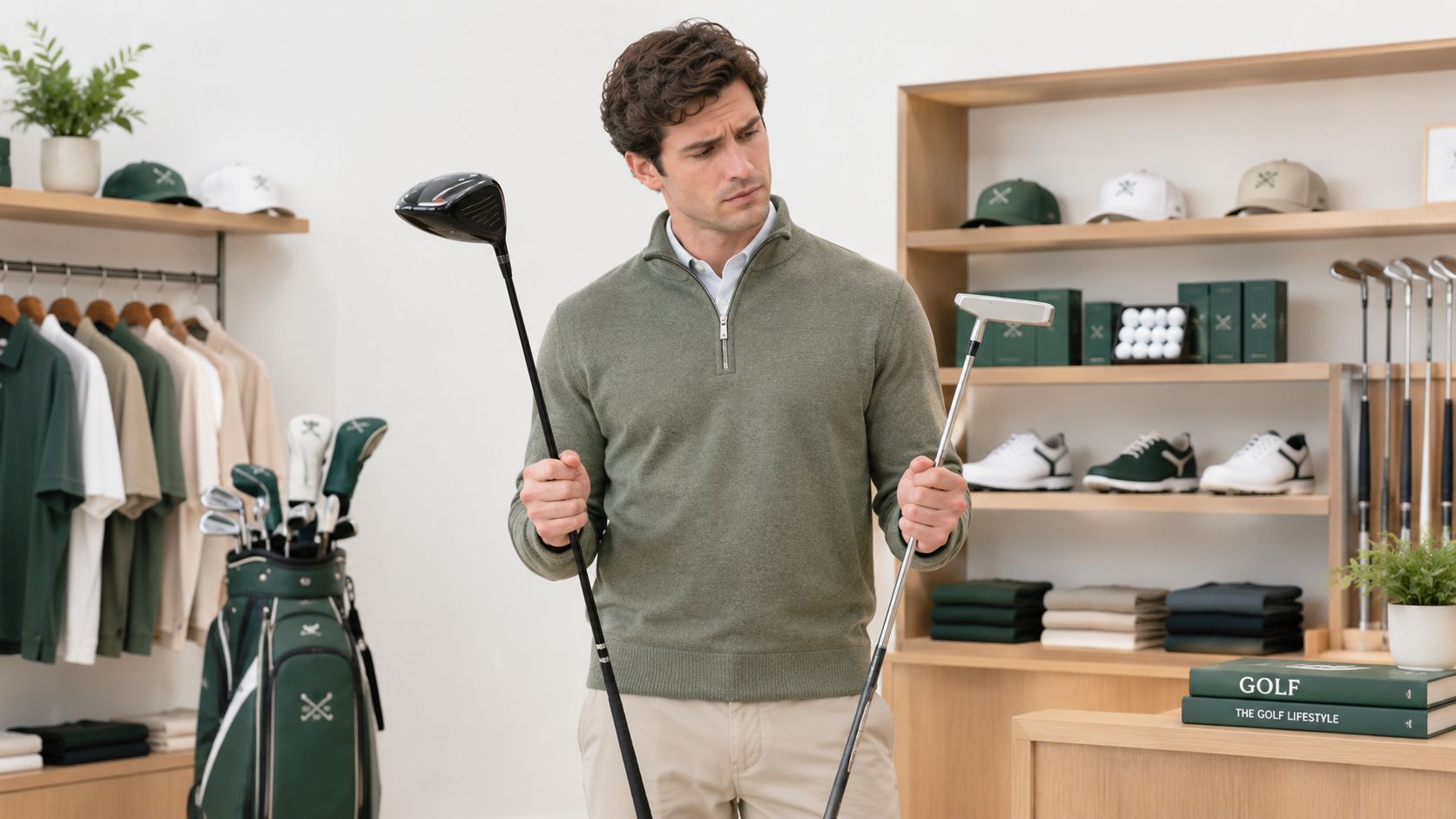
The panic usually starts in a golf shop. You pick up a driver, notice several versions that look almost identical, and then discover that each one can be configured with different lofts, shafts, and flex options. The putters create a different problem. One may suit a straight-back stroke, another an arcing stroke, and the golfer probably already has a strong view on the subject.
Balls aren't much safer than they appear. Golfers often settle on a particular model because of its feel, flight, spin, or price. Gloves need the correct hand and size. Shoes depend on fit and waterproofing. Clothing introduces colour and cut. Even a seemingly universal accessory can duplicate something already buried in the golf bag.
Why golf is unusually difficult to buy for
Most hobbies have a safe middle ground. Golf often doesn't. A camera enthusiast may appreciate a general accessory, but a golfer can reject a club because its balance feels wrong or ignore a gadget because they already use a different system.
The biggest risks are predictable:
- Wrong specification: Clubs should match the golfer's swing and preferences, not the buyer's guess.
- Duplicate equipment: Experienced players may already own several versions of the item you're considering.
- Personal fit: Gloves, shoes, trousers, and tops all depend on measurements or preferred cuts.
- Unused novelty: A golf-themed object can look fun in a guide and still spend its life in a drawer.
Practical rule: If you can't identify the golfer's current equipment, preferred brand, size, and playing habits, don't buy technical gear as a surprise.
An experience changes the decision entirely. The recipient can select a suitable course, choose a lesson that matches their ability, or decide whether they'd rather play alone, with friends, or alongside a professional. You still give them something memorable, but you stop pretending that you know their golf bag better than they do.
That matters particularly for established golfers. A new piece of equipment has to earn its place against items they've chosen through trial and familiarity. A round at a new venue or a useful coaching session doesn't compete with what's already in the bag. It adds something the golfer can't get from another duplicate accessory.
How Many Golfers Are Actually in the UK Right Now
The UK golfer isn't one clearly defined customer. They include the person who plays occasionally with friends, the weekend player who tracks every round, the club member who competes regularly, and the beginner still learning which club does what.
The 2023 R&A satellite account estimated that 9.9% of UK adults played golf at least once in the previous year, around 5.356 million adults. The same report recorded 4.3% playing at least once every four weeks, about 2.357 million regular players. Those figures come from the R&A UK golf participation account, which provides a UK-wide baseline across England, Scotland, Wales, and Northern Ireland.
| UK Golf Participation Statistics | Figure |
|---|---|
| Adults playing at least once in the previous year | 9.9% |
| Adults playing at least once in the previous year | About 5.356 million |
| Adults playing at least once every four weeks | 4.3% |
| Adults playing at least once every four weeks | About 2.357 million |
| Adult population used in the R&A account | 54,353,767 |
The national variation is useful too. England recorded 4.2% four-weekly participation and 9.6% annual participation, while Scotland recorded 6.0% four-weekly participation and 14.2% annual participation, according to the R&A's detailed 2023 account.
What this means for gift selection
The audience is far broader than club golfers. An occasional player may not want a specialist club, but they can enjoy a flexible round, a relaxed lesson, or an experience that doesn't assume they understand equipment terminology.
Regular players have different priorities. They may want to try a course outside their normal routine, improve a recurring weakness, or turn a round into a social occasion. A voucher works across those needs because the golfer makes the final choice.
England Golf's participation data adds another useful signal. It reported 5.75 million scores submitted to the World Handicap System during the first six months of 2025, a 29% year-on-year increase, and described April 2025 as recording a 98% increase compared with April 2024. The organisation also said the first half of 2025 put golf on track to exceed 10.2 million scores entered in 2024, the highest annual total recorded at that point, as reported by Golf Times.
The conclusion is practical. Don't buy as though every recipient is a serious equipment specialist. Choose a gift that works for different levels of commitment, from the occasional golfer who wants an enjoyable day out to the regular player who wants a more focused challenge.
Physical Gifts Versus Experience Gifts for Golfers
Physical gifts give the buyer something tangible to wrap, but that doesn't make them safer. A club can be the wrong model. Clothing can be the wrong size. A gadget can be redundant. Even balls, the sensible fallback, may clash with the recipient's preferred feel.
Experience gifts reverse the responsibility. Instead of choosing the technical details yourself, you give the golfer access to an activity and let them decide how to use it. That makes the gift less about guessing and more about enabling.
| Decision factor | Physical gift | Experience gift |
|---|---|---|
| Fit risk | High for clubs, clothing, shoes, and gloves | Low, because the recipient selects the activity |
| Choice flexibility | Fixed at purchase | Often chosen at redemption |
| Duplication risk | Possible, especially for accessories and gadgets | Very low |
| Personalisation | Depends on buyer knowledge | Created through venue, date, and activity choice |
| Booking effort | None after delivery | Recipient must arrange the date |
| Suitability for beginners | Varies widely by product | Lessons can be matched to ability |
| Suitability for established golfers | Equipment preferences can be difficult to predict | New courses and coaching offer fresh value |
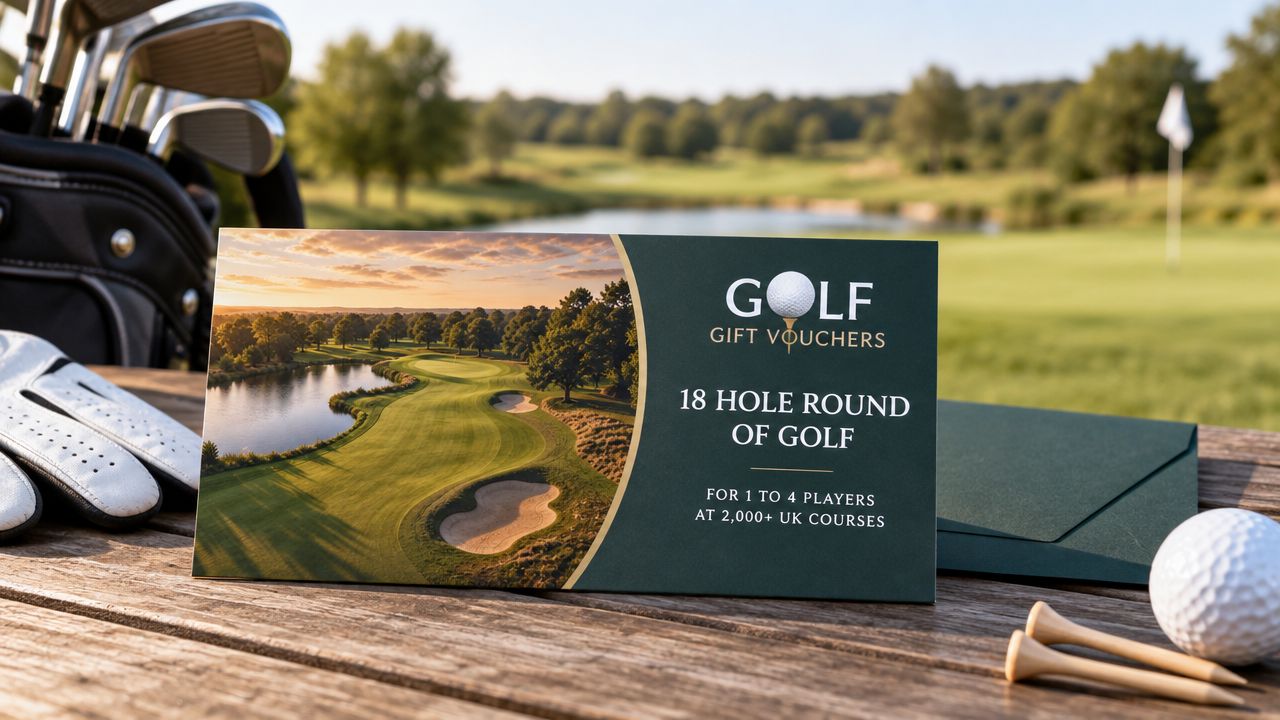
18-Hole Round of Golf is a clear example of the experience model. The voucher can be used for one to four players at more than 2,000 UK courses, is sent by email, and remains valid for 12 months.
Why coaching is a particularly strong gift
A lesson feels personal without requiring you to diagnose the golfer's swing yourself. It gives a beginner a structured introduction and gives an experienced player a chance to address a specific issue with professional guidance.
The satisfaction data supports that choice. UK Coaching reported that eight in ten active participants rated their previous coaching session as good, 32% gave it a perfect 10 out of 10, and the mean experience score was 8.5 out of 10, according to The Golf Business. The same source reports PGA research showing 72% of users undertook further coaching within three months, 78% rated the impact excellent or good, and 66% said they were highly likely to continue coaching and recommend lessons.
That doesn't make every lesson perfect for every golfer. It does show why coaching has stronger perceived usefulness than a random accessory. The recipient gets an activity, professional attention, and a clear reason to keep engaging with the game.
My decision rule is blunt: buy equipment only when you know what the golfer needs. If you don't, choose a voucher that leaves the important decisions with them.
Matching Experience Types to Golfer Skill Levels
The right experience depends less on handicap than on motivation. A new golfer needs confidence and a comfortable introduction. A regular player wants variety or improvement. Someone who already owns premium equipment needs a reason to look forward to the gift.
For a beginner
A first lesson is the strongest choice. It gives the recipient a safe place to ask basic questions, learn a usable grip and setup, and understand how to practise without building bad habits alone.
A shorter or more relaxed playing experience can also work, particularly if the beginner already enjoys being on the course. Avoid making the gift feel like an examination. The best beginner experience removes pressure and creates a clear next step.
The golf lessons voucher guide is useful when you're deciding between a single lesson and a broader coaching option. Think about personality as well as skill. A self-conscious beginner may prefer coaching first, while a sociable beginner may value playing with a friend.

For a regular player
A regular golfer usually doesn't need another generic introduction to the sport. Give them either a new setting or targeted help. A round at a course they haven't played can turn a normal weekend into an occasion, while swing analysis can address a problem they've been discussing for months.
Ask yourself one question: do they talk more about where they play or how they play? Course talk points towards a round voucher. Complaints about a slice, inconsistent putting, or lost distance point towards coaching.
For the hard-to-buy-for golfer
This recipient owns the equipment they want and notices when someone buys the wrong thing. Don't compete with their expertise. Choose an experience that creates access to something they wouldn't casually arrange for themselves, such as playing with a professional, booking a coaching package, or trying a new venue.
| Recipient profile | Recommended experience | Why it fits |
|---|---|---|
| New golfer | Introductory lesson | Builds confidence without equipment guesswork |
| Improving golfer | Swing analysis or focused lesson | Connects the gift to a specific problem |
| Regular club golfer | Round at a different course | Adds variety to an established routine |
| Social golfer | Round for several players | Turns the gift into shared time |
| Equipment-rich golfer | Professional-led experience | Offers value beyond another object |
If you're still unsure, choose flexibility over ambition. A voucher that lets the golfer decide is more considerate than a supposedly impressive experience they can't conveniently use.
How Digital Golf Vouchers Work and Get Redeemed
The process is straightforward, but buyers should understand it before purchasing. A digital voucher isn't an instruction to attend a particular course on a fixed date. It's a way of giving the recipient access to a choice of eligible golf experiences.
The redemption process
- Buy the voucher: Choose the experience or a flexible value through the provider's online checkout.
- Receive the email: The voucher is delivered digitally, so there's no postal packaging or delivery wait.
- Browse the options: The recipient visits the redemption platform and reviews participating UK courses, coaches, and available activities.
- Select the experience: They choose a venue and activity that match their location, playing level, and preferences.
- Pick a date: The recipient submits a suitable date, allowing the booking to fit around work, weather, and other plans.
- Let the service coordinate: The booking team handles the arrangements with the selected venue or coach.
The Golf Gift Vouchers redemption guide sets out the process for recipients who want to understand the booking stages before committing to a date. Course choice at redemption is the important feature. You don't need to know which venue the golfer prefers when you buy the gift.
What buyers should check
A voucher's practical value depends on the terms, not just the photograph on the product page. Look for:
- Validity: A 12-month validity period gives the recipient room to choose an appropriate season and date.
- Location: A broad course network matters if the golfer lives away from your home area or travels regularly.
- Delivery: Digital email delivery suits last-minute purchases and avoids parcel collection problems.
- Refund terms: An unredeemed voucher with a 30-day money-back guarantee gives the buyer a defined safety net.
- Payment: Checkout options can include card and Klarna payments, depending on the provider's current terms.
The recipient still has to book. That isn't a flaw, it's the mechanism that prevents you from choosing a date they can't attend. Tell them to start the redemption process early enough to compare venues and dates, especially if they want a particular course or coaching time.
Why Last-Minute and Corporate Golf Gifts Need Digital Delivery
Physical presents become awkward when the occasion is close. Delivery cut-offs shrink, the right size may be unavailable, and a return becomes more complicated if the recipient is away. A digital voucher solves the immediate delivery problem without forcing the buyer to choose a rushed piece of equipment.
That makes it especially useful for birthdays, Father's Day, Christmas, and workplace rewards. You can send the gift by email when a parcel would arrive too late, and the recipient can make the booking when their diary and local conditions work.
Last-minute rule: If the gift has to arrive today, choose something that can be delivered today and used later.
Corporate buyers face a different version of the same problem. A team may include beginners, regular players, people who prefer coaching, and recipients who just want a round with friends. Sending everyone the same physical golf product imposes one choice on a mixed group.
A digital voucher creates a consistent reward while allowing individual selection. That reduces the need to collect sizes, ask about equipment brands, organise multiple delivery addresses, or explain why one recipient received a left-handed glove and another received a right-handed one.
Why flexibility matters across the year
Weather and diaries affect golf more than most gift categories. A recipient may be travelling, recovering from an injury, changing clubs, or waiting for better conditions. A validity period gives them time to make a sensible choice instead of booking because the gift is about to expire.
For business gifting, keep the message simple. Explain what the voucher covers, where redemption happens, and how long the recipient has to use it. The experience should feel like a reward, not another administrative task.
The 30-day money-back guarantee for unredeemed vouchers adds reassurance for buyers who are purchasing close to an event. Check the current terms before ordering, but the principle is sound: digital delivery removes timing friction, while recipient-led booking removes much of the scheduling friction.
Perfect Gift Pairings for Every Golfing Occasion
A weekly-playing partner doesn't need another guessed-at accessory. Give them a round they can share with friends, or pair the experience with lunch so the day feels like an outing rather than a transaction.
For a beginner's birthday, choose a lesson. It acknowledges their new interest and gives them practical help without making them buy the right clubs first. For a golfer who already plays regularly, choose a flexible voucher and let them decide whether the next occasion calls for coaching, a new course, or a social round.
Father's Day suits a gift with a clear personal connection. An online swing analysis can work for a father who enjoys practising privately, while a playing experience gives you an opportunity to spend time together. If food is part of the occasion, a playing lesson and lunch combines instruction with a more complete day out.
Corporate rewards should stay flexible. Employees have different abilities, home courses, and diaries, so a voucher that leaves the choice with each recipient is more thoughtful than identical equipment.
Christmas and milestone birthdays justify a larger experience, especially for someone who already has a full bag. Choose a voucher that can support more than one session or a memorable round, then let the golfer decide when and where to use it.
The pattern is consistent: casual players need accessibility, regular players value choice, and experienced golfers appreciate experiences that equipment can't provide. Stop trying to identify the one club they secretly need. Give them a reason to play.
Golf Gift Vouchers offers digital vouchers for UK golf rounds, lessons, swing analysis, and other experiences, with recipient-led redemption and email delivery. Visit Golf Gift Vouchers to choose a flexible gift that avoids equipment guesswork and lets the golfer select an experience that fits.