


On this page
You're trying to sort a gift at the last minute, and the clock's already working against you. A gift voucher solves that problem fast, but in the UK it does more than save time, it gives the recipient room to choose something they'll use. The challenge is picking one that fits the person, the occasion, and the way people now redeem vouchers on phones, emails, and quick checkout pages.
The UK gift-card and voucher market was valued at just under £7 billion in 2019, with around 67% coming from consumer purchases and 33% tied to business-funded cards for rewards or incentives (Cardyard's UK gift-card statistics). That size tells you something simple. Gift vouchers aren't a niche fallback, they're a normal part of how people give, reward, and solve awkward gifting moments.
Introduction to Gift Vouchers UK
A rushed buyer usually has the same shortlist in mind. You need something that feels thoughtful, arrives on time, and doesn't trap the recipient in a choice they never wanted in the first place. That's why gift vouchers UK shoppers rely on have become such a practical answer, especially when the occasion is close and the recipient's preferences are hard to pin down.
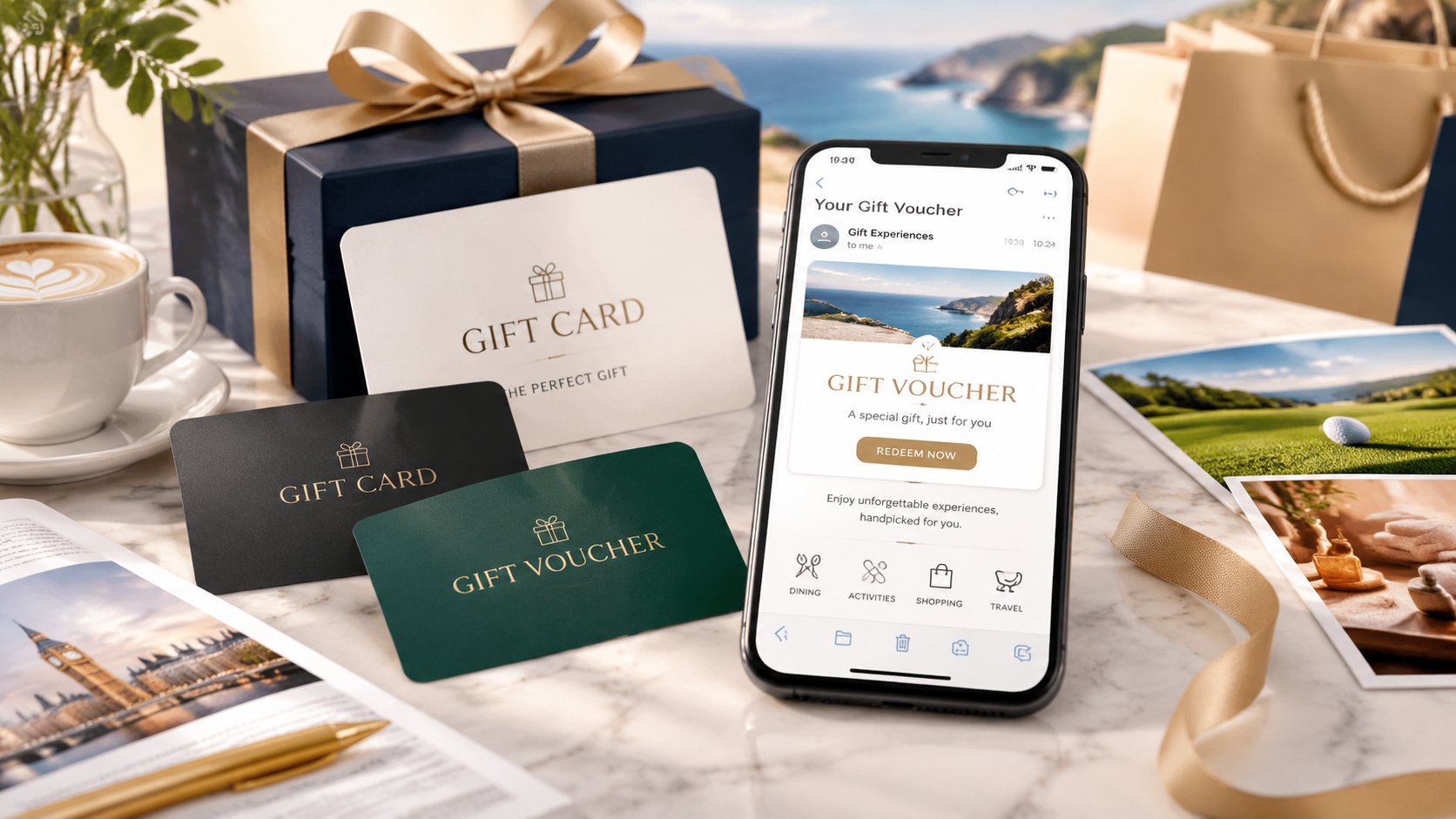
The trick is that vouchers aren't all the same. Some are tied to one brand, some work across multiple retailers, some offer days out or lessons, and some are delivered digitally in minutes. The format matters because the same voucher can feel brilliant to one person and awkward to another, depending on whether they want flexibility, a memorable experience, or instant access.
A good voucher behaves less like a note in an envelope and more like a prepaid pass with rules attached.
That's the simplest way to think about it. Once you understand the value, the delivery method, and the redemption terms, the whole category becomes much easier to judge. The rest comes down to matching the voucher to the actual moment, not just the price on the card.
Understanding Gift Voucher Basics and Types
A gift voucher is prepaid value that the recipient spends later. The easiest analogy is a ticket stub. The stub itself doesn't create value; it holds a right to use that value under certain conditions, and those conditions matter when you come to redeem it.
The main types you'll see
Retail brand vouchers are the most familiar. They're usually tied to a single shop or chain, which makes them simple if you already know what the recipient likes, but less helpful if their tastes are broad or you're unsure about size, style, or location.
Multi-store gift cards give more flexibility. They suit recipients who like choice and don't want to be pushed into one retailer. The trade-off is that they can feel less personal unless you choose the right brand or presentation.
Experience vouchers are different again. They're for golf days, spa visits, meals, lessons, or other activities, so the value is spent on an event rather than a product. That makes them a strong fit when you want the gift to feel memorable instead of purely practical.
Open-value vouchers let the buyer choose the amount at purchase. The Golf Gift Voucher is one example of that approach, with a value that can be set from £50 to £1,000 and delivered by email for use towards lessons, rounds, or another golf experience on Swyng.
Practical rule: if the recipient already has a favourite retailer, a branded voucher is usually enough. If they're hard to predict, flexibility usually wins.
How Gift Vouchers Work and Redemption Processes
A voucher's life cycle is usually straightforward. Someone buys it online or in a shop, the recipient receives it by email or in a physical card, and redemption happens later when the recipient uses the code, barcode, or reference number at checkout or during booking. The important part is that the voucher only becomes useful when the terms match the way it's being used.
The usual redemption path
First, the buyer chooses the voucher and pays. Then the recipient stores it, often in an inbox, wallet app, or physical drawer where it's easy to lose if no one is careful. Finally, the recipient applies the code during booking or at checkout, and the system confirms whether the voucher is valid for that purchase.
That sounds simple, but most problems come from small misses. People forget the expiry date, enter the code in the wrong place, or assume the voucher can be split across every type of product. With experience vouchers, the exact route matters even more, because the recipient may need to book first and then redeem as part of that process.
The government reported that 6% of consumer-bought vouchers go unused each year, and industry commentary values unspent UK gift-card balances at about £300 million annually (government reporting on unused vouchers). That's why checking the redemption route early matters more than people think.
If you want a worked example of the process, the steps laid out on how it works show why email delivery and recipient-led booking are so useful for a golf gift. The buyer hands over the gift quickly, and the recipient still gets to decide when and where to use it.
Legal Considerations and Common Voucher Misconceptions
UK gift vouchers are mostly governed by contract law, not by a special standalone statute. That means the issuer sets the expiry dates, validity periods, and any inactivity fees in the terms at purchase, while the Consumer Rights Act 2015 acts as the fairness and transparency check on those terms (NI Assembly briefing on voucher law).
What people often get wrong
The first misunderstanding is that vouchers must all last the same length of time. They don't. If the issuer sets a short validity period, the key question isn't whether that period exists, it's whether the terms were presented clearly and fairly at the point of sale.
The second misunderstanding is about protection. Section 75 of the Consumer Credit Act 1974 can apply to card-funded purchases above £100 if there's misrepresentation or breach of contract, but that doesn't mean every voucher purchase automatically gets the same treatment. The protection depends on how the payment was made and what went wrong.
Read the terms before you buy, not after the recipient has already received the code.
That one habit solves a lot of frustration. It also helps you spot whether the voucher is tied to a specific experience, whether it can be transferred, and whether there are limits that would make redemption harder for the person receiving it.
A practical example is a voucher bought for lessons or a round of golf. If the recipient needs to pick a date, a venue, or a session type later, the wording should make that clear. The linked voucher guide on golf lessons is useful as a reminder that the main issue is usually not whether a voucher exists, but how clearly it explains what happens at redemption.
Delivery Options and Digital Redemption Trends
Delivery is now part of the gift itself. A physical card still works for planned occasions, but instant email delivery suits people who need a same-day option or who want the recipient to receive the voucher wherever they're already checking messages. That shift matters because gifting has become more mobile, more last-minute, and less dependent on printing or postal timing.
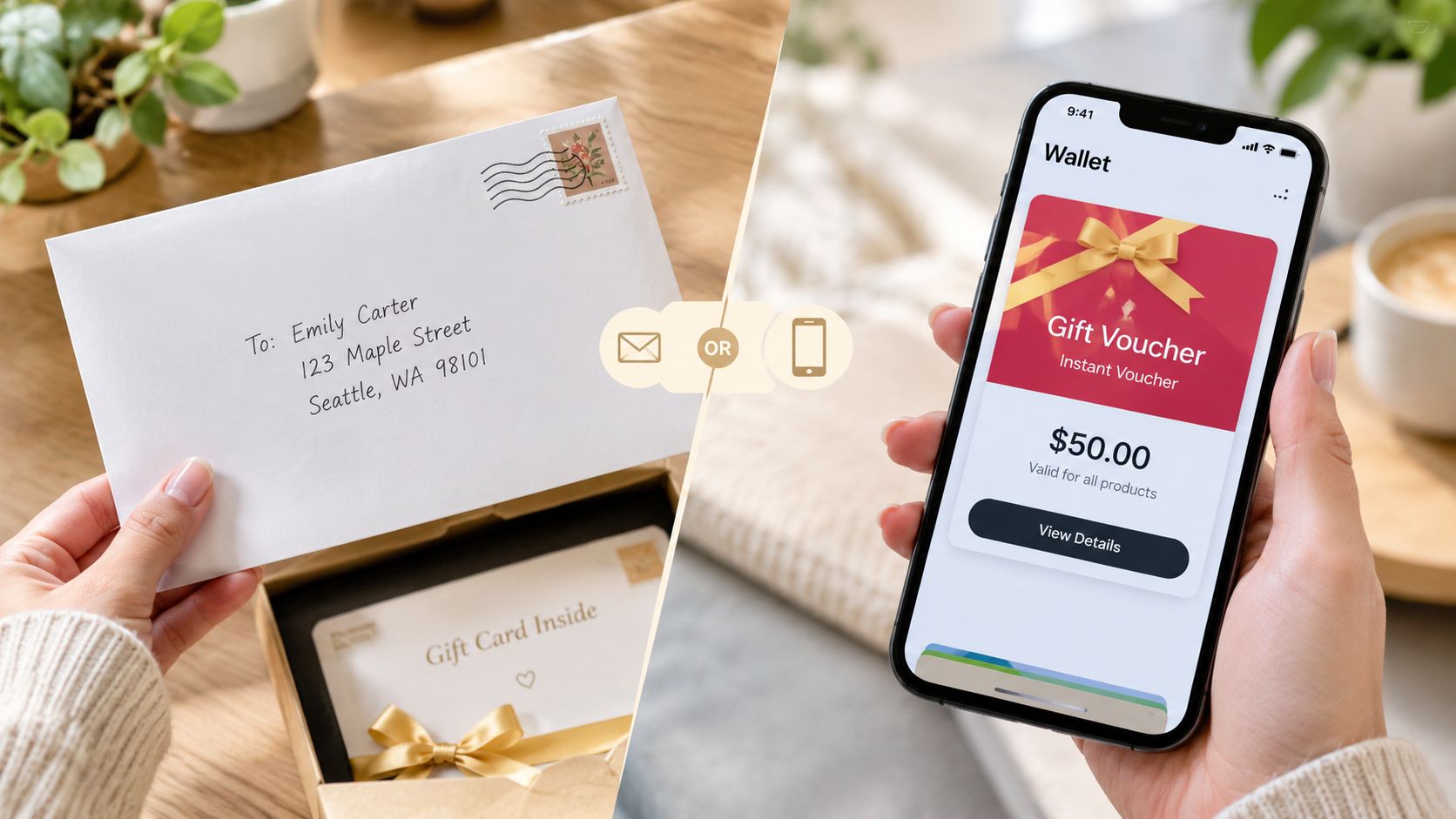
Industry forecasts put the UK gift card market at about US$11.87 billion in 2025, with digital gift cards and experience vouchers driving strong growth in last-minute and mobile purchases (GCVA consumer report, January 2025). That doesn't mean physical cards are obsolete. It does mean the most useful voucher is often the one the recipient can open, store, and redeem without any extra friction.
Why digital fits modern behaviour
Digital delivery helps in three ways. It arrives quickly, it's easy to forward or save, and it matches the way many people already buy and book on their phones. For experience vouchers, that's especially useful because the recipient can move from inbox to booking without waiting for post or scanning a card from a drawer.
It also changes the gift itself. Instant email delivery isn't just a convenience feature anymore, it's a response to how people shop now. The recipient may be deciding on a course, a lesson, or a day out while they're already on mobile, so the voucher needs to fit that flow rather than interrupt it.
The redemption stage matters too. A mobile-friendly journey reduces the chance that a voucher gets forgotten, misfiled, or left unused. If the buyer wants a golf-focused experience, the redeem page shows the sort of process that works well when the voucher is meant to be used online and the recipient wants a quick path from gift to booking.
How to Choose the Right Gift Voucher and Conclusion
Start with the recipient, not the voucher category. A busy relative usually benefits from instant delivery and simple redemption. A golf enthusiast may prefer a voucher that lets them choose the course or lesson later. A corporate reward recipient often needs flexibility, so the gift feels usable rather than restrictive.
Use this short checklist before you buy:
- Match the gift to the person: choose an experience if they value days out, or a flexible voucher if their tastes are hard to predict.
- Check delivery speed: digital delivery helps when timing is tight.
- Read the terms: look at expiry, fees, and redemption limits before paying.
- Think about the handset, not just the card: if the recipient will use it on mobile, make sure the process is easy on a phone.
- Prefer clarity over novelty: a simple voucher that gets redeemed is better than a clever one that sits unused.
The right voucher feels easy at every stage, from purchase to redemption. When you line up the format with the person and the moment, you get a gift that solves the practical problem and still feels personal.
If you want a golf gift that works around real schedules, Golf Gift Vouchers offers digital vouchers that can be put towards lessons, rounds, and other golf experiences on Swyng. It's a straightforward option if you want the recipient to choose the experience later and receive the voucher by email.